
Colombia funds solar program for low-income homes with $2.1 billion
Colombia has approved COP 8.35 trillion ($2.1 billion) for its Colombia Solar program to equip 1.3 million low-income households with PV systems between 2026 and 2030.

Ascent Solar testing CIGS modules for power beaming, marine applications
The US-based developer of copper indium gallium selenide thin-film PV products said its modules will be tested without modifications by companies developing marine PV and power beaming applications.

RatedPower enhances solar plant design platform with 3D simulation capabilities
RatedPower has introduced a 3D simulation feature to improve accuracy in utility-scale solar design, enabling more precise yield modeling that reflects terrain variations and shading, validated against real production data.
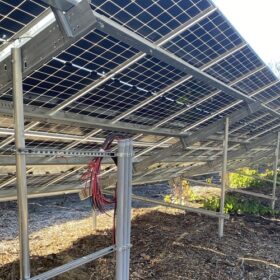
Machine learning-based fault detection technique for bifacial PV
A UAE research team developed a hybrid 1D-CNN and random forest model to detect multiple faults in bifacial PV systems, including dust, shading, aging, and cracks. Using simulated I-V curves and a 180-day synthetic dataset, the model achieved up to 100% accuracy in general state detection and 97.6% in specific fault classification.
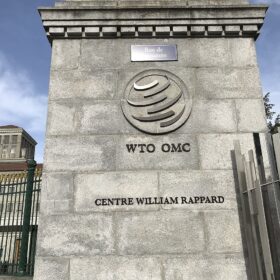
What WTO can still do to regulate global cleantech trade
pv magazine spoke with energy and environmental law expert Anatole Boute about the past and future role of the World Trade Organization (WTO) in regulating trade disputes related to clean energy technologies amid current geopolitical tensions. He noted that despite recent protectionist efforts to revive the solar manufacturing industry, the European Union still strives to remain compliant with WTO rules.

Mercedes unveils car with 20% efficient ultra-thin solar coating
Mercedes-Benz unveiled its first car prototype with a silicon-free, 20%-efficient nanoparticle solar coating that powers the vehicle even when off and uses modules thinner than a human hair.
Optimizing solar-plus-storage operation for markets with imbalance penalties
Scientists in Japan have used a deep reinforcement learning–based AI model to calculate discrepancies between the planned and actual electricity supply volumes in PV-battery systems operating in markets where grid imbalances are penalized. Through a series of simulations, they found that the proposed methodology can reduce imbalance penalties by approximately 47%.

Romania drafts cybersecurity rules for PV, cogeneration up to 1 MW
Romania plans to amend its energy law to require the National Cybersecurity Directorate (DNSC) to define technical standards for PV and cogeneration systems up to 1 MW, aimed at preventing data breaches and safeguarding grid operations.

Deployable tracker-based rooftop PV system for stadiums
An international research team has developed a tracker-based rooftop PV system that can be installed on both new and existing stadiums. The proposed design reportedly allows for easier deployment and delivers higher power output compared to conventional stadium PV covers.

Mexico targets up to 9.5 GW of solar and wind by 2030
Mexico’s Secretaría de Energía (Sener) plans to add 6.4 GW to 9.5 GW of renewable capacity while keeping state-owned CFE’s share above 54%, integrating storage and efficiency measures to stabilize the grid.
