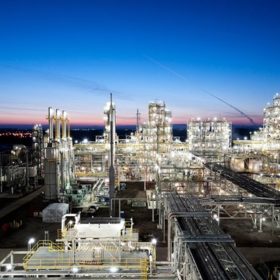
Hanwha commits to US manufacturing across the supply chain
Hanwha Solutions becomes the largest shareholder of REC Silicon and, pending passage of SEMA, commits to a multi-phase, multi-billion-dollar expansion across the full solar energy supply chain.
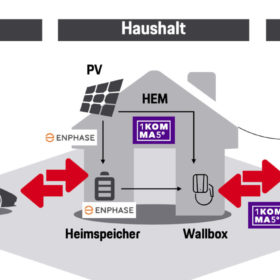
1Komma5°, Enphase plan European virtual power plant relying on solar, storage, heat pumps and EV recharging
Through a strategic partnership, the two companies want to equip 1.5 million buildings in Europe with photovoltaics, storage systems, recharging solutions for electric vehicles, and heat pumps by 2030.
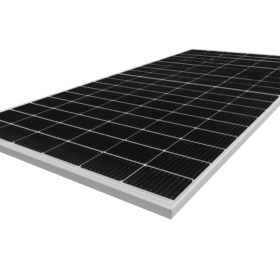
JinkoSolar shipped 25.2GW of PV products in 2021
The Chinese module manufacturer saw its sales and turnover increase significantly in the past financial year. The company said it is benefiting from increasing demand for n-type products worldwide, and also for distributed generation systems, with which higher returns can be achieved.
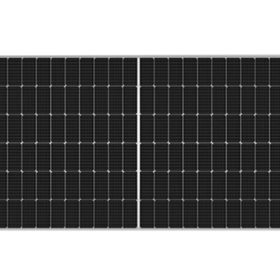
Gautam Solar unveils 566W bifacial solar module
The G-2X Mono series solar modules boast a reported front and back power conversion efficiency of up to 25.72%.

New solar carport solution from France
The PowerPark carport is equipped with 5.6kW of monocrystalline modules and one or more WallBox charging stations for hybrid or electric vehicles. French company Aterno is selling the system, starting from €19,900 – excluding VAT – depending on the project configuration.
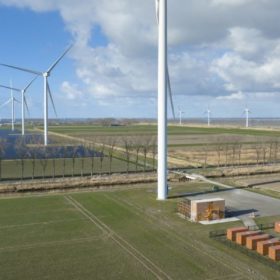
Vattenfall energizes hybrid wind-solar-storage plant in the Netherlands
The Haringvliet energy park consists of a 38MW solar facility a 22MW wind power complex and 12 battery containers. The three systems share the same grid connection.
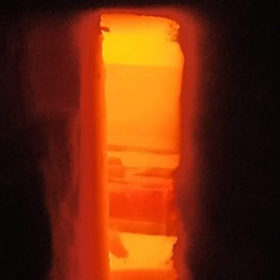
Latent heat thermophotovoltaic battery for renewables storage
Developed by researchers in Spain, the battery uses renewable electricity to melt low-cost metals such as silicon or ferrosilicon alloys to produce and store latent heat, which is in turn used by a thermophovoltaic generator to produce power. According to its creators, the device may store electricity at a cost of €10 per kilowatt-hour for a 10MWh system.
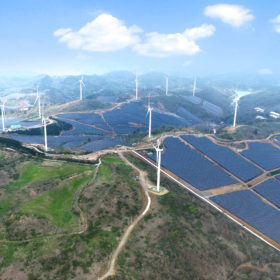
South Korea’s first renewables-linked PPA
Korean beauty products supplier Amorepacific has agreed to buy electricity from 5MW of renewables operated by LNG provider SK E&S. The 20-year deal is South Korea’s first step into unsubsidized renewable energy development.
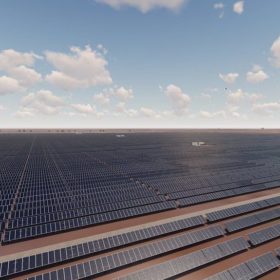
Simec ‘gearing up’ to start work on 280MW South Australian solar farm
Work on the long-awaited 280MW Cultana Solar Farm in South Australia appears set to begin with Simec Energy Australia announcing this week it is preparing to start construction on the $350 million project.
US legislation introduced to build renewable energy ‘superhighway’
Sen. Ed Markey’s Charge Act requires forward-looking transmission planning by utilities to lower prices and improve reliability. Among other sweeping changes, the bill requires hourly operational and greenhouse gas emissions reporting in a timely manner.
