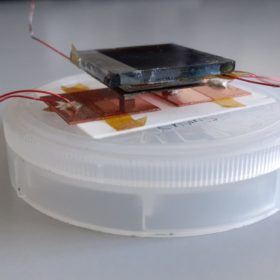
Recovering waste heat from solar cells via a thermoelectric generator
Scientists in Italy have created a hybrid thermoelectric photovoltaic (HTEPV) system based on a thermoelectric generator and a wide-gap perovskite solar cell. The device is able to recover waste heat from the PV unit and produce additional power. According to its creators, this configuration needs large gap cells as these are less sensitive to temperature in terms of efficiency
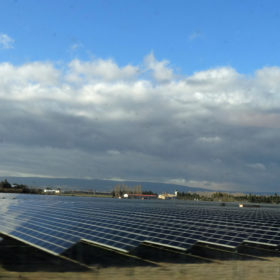
Change in ownership for 153 MW PV project in Romania
The 153 MW Ratesti PV project was acquired by Israel-based independent power producer Nofar Energy. The facility will be located in the Arges county, in southern Romania.
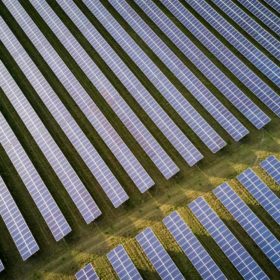
Heliene to open third module factory in the United States
The plant will produce super-high-efficiency heterojunction solar cell modules for residential and commercial applications.
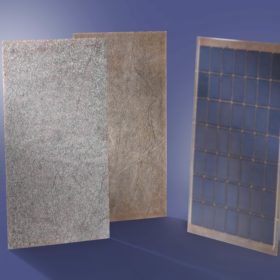
Facade BIPV modules designed with stone veneers
Developed by a German group of scientists, the panels are considered an ideal solution for aesthetically demanding applications in buildings with stone facades. Although their power yield is more than halved compared to conventional modules, the modules can also be used as partial shading walls or semi-transparent roof elements.

Double-layered anti-reflective coating for heterojunction solar cells
South Korean scientists have developed a novel coating that purportedly reduces average cell reflectance and significantly increases short-circuit current. The coating is based on aluminum oxide and indium tin oxide.
PV glass producer plans new factory in India
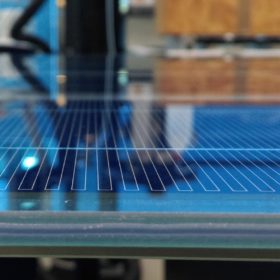
Auto glass producer Asahi India Glass and polymer packaging specialist Vishakha have revealed plans to jointly set up India’s largest solar glass plant in the state of Gujarat. The factory will initially have a capacity equivalent to 3 GW of solar installations per year.

Agrivoltaics for rabbit farming
U.S. scientists have developed a new way to combine PV generation and rabbit farming. They claim their new approach to agrivoltaics produces lower emissions and uses less energy than non-integrated methods.

Mongolia launches EPC tender for 10 MW solar park
The PV project is part of a program aimed at deploying 40.5 MW of solar and wind capacity in the country’s western and Altai-Uliastai regions.
Novel design for east-west solar parks reduces soil deterioration
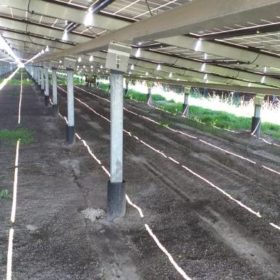
Researchers from the TNO in the Netherlands have proposed two novel east-west PV plant designs that are claimed to increase soil quality underneath the solar panels. Both approaches are said to provide a 77% ground coverage ratio, which compares to a 90% ratio in conventional east-west oriented projects.
Chinese PV Industry Brief: Xinte raises funds for 100,000 MT polysilicon factory, Bbetter plans new EVA solar film factory
Xinte’s parent company – TBEA – has agreed to buy new shares issued by the company for RMB2.3 billion and these funds will be used to implement its 100,000 MT expansion plan. Furthermore, EVA solar film manufacturer Bbetter Century and 8 GW factory in the Shaanxi Province.
