
Kenyan utility seeks proposals for PV plant at water treatment site
The tender was launched by Nyahururu Water and Sanitation Company (Nyahuwasco), which operates in the Laikipia West sub-county of Laikipia County, in central Kenya.
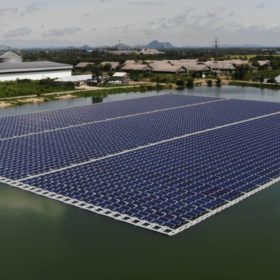
Thailand’s first floating PV project goes online
The 2 MW plant is installed at the historic site of agro-food group SPM, in Thailand. With 2.8 GWh/year of low-carbon electricity, it will cover up to 20% of the site’s annual energy consumption.
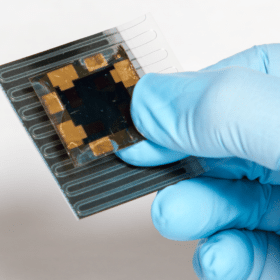
Solliance, MiaSolé hit 26.5% efficiency on tandem CIGS/perovskite solar cell
MiaSolé and Solliance have achieved record performance by optimizing the bandgap and the efficiency of both the rigid semi-transparent perovskite top cell and the flexible CIGS bottom cell.
India joins race to develop high-efficiency solar cells
India’s Ministry of New and Renewable Energy is funding research to develop high-efficiency crystalline silicon solar cells, as well as perovskites.
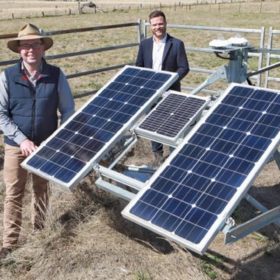
Financial close for 400 MW solar park in Australia
Bank of China, Commonwealth Bank of Australia, and Westpac have provided debt financing to bring the first 400 MW stage of the New England Solar Farm to financial close.

Silver prices expected to rise by 11% this year
Silver demand for PV production worldwide is forecast to grow to 105 million ounces this year, as overall demand hits an eight-year high. Prices for the precious metal could reach a seven-year high of $30.00 per ounce this year but, according to the Silver Institute, this level is still far away from any critical threshold that would make silver supply for the solar industry problematic.

Chinese PV Industry Brief: Tongwei and Jinko team up, as NEA sets new 2030 targets
China’s National Energy Administration expects renewables to represent 40% of the nation’s energy consumption by 2030, and proposed new targets for local and regional government authorities. On the manufacturing side, Tongwei and JinkoSolar announced plans to deepen their strategic cooperation, and Huadian Group has launched its first tender this year for 7GW each of modules and inverters.

Western Australian opposition party proposes 4.5 GW solar plan
Western Australia’s opposition leader has proposed a new energy policy ahead of the state’s upcoming March 13 election, with plans to phase out coal and deploy solar, wind, and hydrogen.
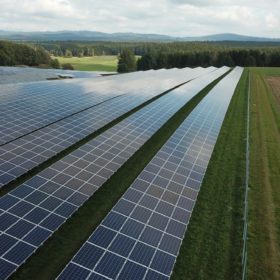
Indian state inching toward 10 GW of PV for farming
The success of the recent 6.4 GW solar auction in the Indian state of Andhra Pradesh has brought it closer to achieving its plan to install 10 GW of PV to support farmers.
Modeling the potential of lead-free perovskites
Scientists in India modeled the performance of tin-based perovskite (methylammonium tin triiodide) finding that with careful optimizations the material could achieve efficiencies beyond 28%.
