
Identifying early-stage discoloration in EVA encapsulants
A new, non-destructive method has been proposed by researchers in India who say identifying early-stage discoloration in EVA encapsulants can help detect degradation in solar panels before power output is affected. The scientists used an ultraviolet accelerated aging test during 34 days on three encapsulant samples.

Tender launched for 4.5 MW of solar in Barbados
The Barbados Water Authority is seeking proposals for three PV plants for a total 4.5 MW of generation capacity plus a 2 MW micro turbine. The installations will power pumping stations.

The US added 13.3 GW of solar in 2019, beating new wind and gas capacity
According to data released by analyst Wood Mackenzie and the Solar Energy Industries Association, the U.S. added more than 2.8 GW of residential solar last year. Cumulative operating PV capacity now tops 76 GW.

Analyst expects recovery for PV and storage supply chains
U.S.-owned analyst Wood Mackenzie expects solar demand to decline but predicts the market will recover, with the prospects for the energy transition remaining intact.

Danish fjord to host 400 MW of solar
The Danish Energy Agency says there will be large scale PV projects in the Nissum Fjord area. One of the projects, under development by Better Energy in the municipality of Holstebro, has a planned generation capacity of 206 MW.
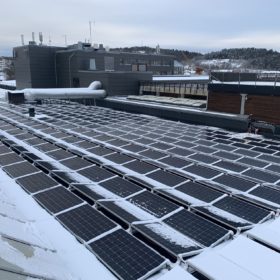
Heating solar panels to clear snow
A Norwegian company has developed a way to melt snow on modules to avoid excess weight on roofs and panels, especially on large commercial and industrial arrays. A control system measuring snow density is linked to DC power supply units to warm the panels.

Financing deal announced for 151 MW of PV in Italy
Despite the country’s difficult struggle with the COVID-19 outbreak, the Italian solar market is sending some encouraging signs. Italian lender Intesa San Paolo has awarded a €55 million credit facility to Canadian Solar for a portfolio of 12 unsubsidized solar projects.
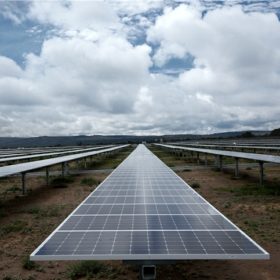
Big solar+storage project linked to hydrogen production in Spain
Spanish utility Iberdrola plans to link a 100 MW/20 MWh solar-plus-storage plant to hydrogen production in Puertollano, in southern Spain. The project will require an investment of up to €150 million euros and will be one of the largest installations of its kind in Europe.
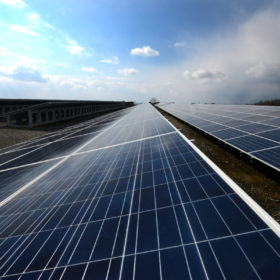
EnBW starts working on 187 MW unsubsidized PV plant in Germany
The utility will build the project this year on 164 hectares of land just outside of Berlin. It will be the largest solar park to be constructed outside of Germany’s incentive scheme for solar and renewables.

Solar growing faster than expected in Sweden
The Swedish Energy Agency this week said solar power supplies will increase from 400 GWh in 2018 to 1.7 TWh in 2022. Total energy supply in the country is expected to decline from 551 TWh to 526 TWh in the 2019-22 period, due to the shutdown of several nuclear power plants.
