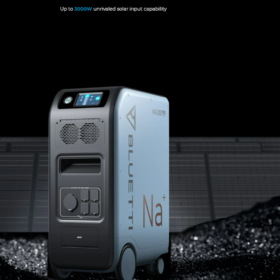
Bluetti launches sodium-ion solar generator
Bluetti’s NA300 sodium-ion solar generator offers thermal stability, fast-charging capacity, low-temperature performance, and integration efficiency.

Enphase enters EV charging market
The completed acquisition of ClipperCreek launches Enphase Energy into the fast-growing market for electric vehicle charging systems.

PV-powered heat pump system for commercial swimming pool heating
Researchers in Jordan have designed a solar-assisted heat pump system for swimming pool heating at a hotel in the coastal city of Aqaba. They found that the system has a payback time of only 1.94 years and that total profits after ten years of operations may reach around $1.88 million.
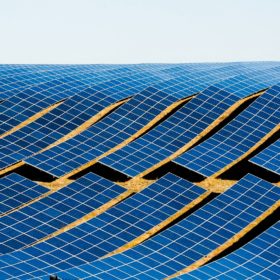
Azure Power commissions 600MW Rajasthan solar project
The PV plant, in the Bikaner district of the state, is the largest PV power project in India owned and operated at a single location by a developer.

Germany installed 410MW of PV systems in November
The newly installed PV capacity for the first 11 months of 2021 reached 4,844MW.

Solar for polytunnel greenhouses
Israeli researchers have tested organic PV modules to power polytunnel greenhouses and have found that they might offer advantages over conventional crystalline silicon, despite their lower efficiency rates. They have lower operating temperatures but are subject to degradation, due to the mechanical stress caused by the wind-induced movement of tunnel sheeting.

Iran wants to deploy 10 GW of renewables over the next four years
According to the Iranian authorities, there are currently more than 80GW of renewable energy projects that were submitted by private investors for review.
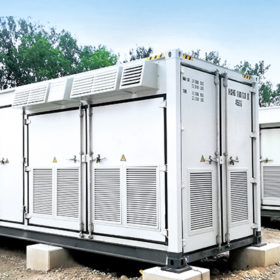
Massive deal in Israel’s growing energy storage market
China-based Sungrow has agreed to supply Israeli developer Enlight with 430MWh of its storage systems. The batteries will be used in two projects secured by Enlight in tenders held by the Israel Public Utility Authority for Electricity.

Antimony selenosulfide solar cell with 10.7% efficiency
Scientists in China have developed a cell with an open-circuit voltage of 0.673 V, a short-circuit current of 23.7 mA per cm2, and a fill factor of 66.8%. They improved the quality of the antimony selenosulfide films by using alkali metal fluorides.
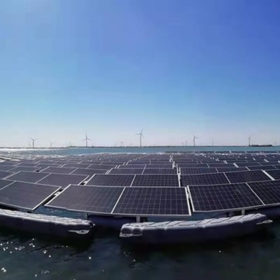
World’s largest floating PV plant goes online in China
Huaneng Power International has switched on a 320 MW floating PV array in China’s Shandong province. It deployed the plant in two phases on a reservoir near its 2.65 GW Dezhou thermal power station.
