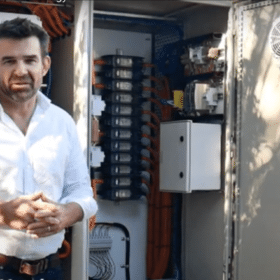
Redox launches high-voltage redox flow storage solution
Australia’s Redflow has unveiled its new Energy Pod Z module.
Chinese PV Industry Brief: Zhonghuan raises wafer prices as president calls for faster action on emissions
Henan province immediately responded with a plan to deploy another 20 GW of solar and wind by 2025.
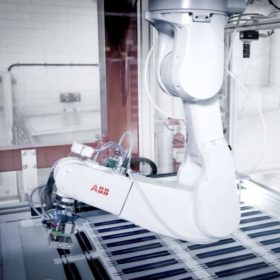
Exeger ramps up dye-sensitized solar cell production in Sweden
The Swedish company secured $38 million to build a manufacturing facility it has planned with the support of Swiss conglomerate ABB. The factory will be located in Stockholm and produce the company’s Powerfoyle products.
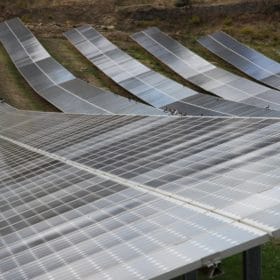
Italian PV sector cautious about Covid-19 recovery package
The Italian PV world remains cautiously skeptical about the €220 billion post-pandemic recovery plan that Rome presented last week. It outlines steps for agrivoltaics, but retains preferential treatment for the gas sector (biomethane and hydrogen), and notes the marginal role of batteries and pumping systems. However, the green policies are not final and could still be shaped by related decrees and non-financial measures.

France allocates 29 MW in PV tender for non-interconnected areas
Akuo, Amarenco and Voltalia secured the largest amount of capacity in the procurement exercise.
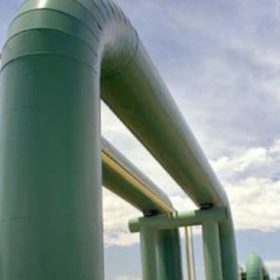
‘Hydrogen as a universal climate solution might be a bit of false promise’
Hydrogen and hydrogen-based fuels will not be able to move forward fast enough to replace fossil fuels and tackle climate change, according to a German-Swiss research team that claims direct electrification alternatives are cheaper and easier to implement. The scientists cite too-high prices, short-term scarcity and long-term uncertainty, as the main reasons for their skepticism.
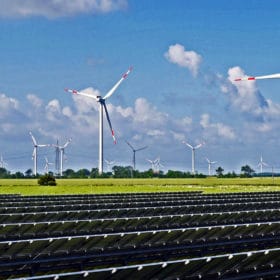
Indian utility tenders 500 MW of hybrid wind-solar projects
The selected bidders in a new Indian tender will set up wind-solar hybrid power projects to supply power under 25-year PPAs. Bidding closes on June 8.
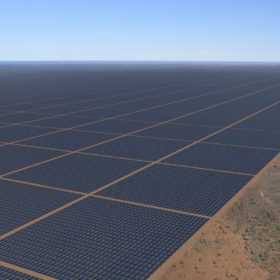
Australia’s solar capacity could hit 80 GW by 2030, says GlobalData
A new GlobalData report suggests that Australia’s solar capacity could reach 80 GW over the next decade.
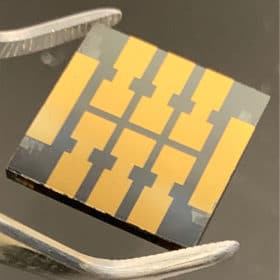
Perovskites stick together for better performance
Scientists in the U.S. demonstrated an additive that acts as a “molecular glue” within a perovskite solar cell. Treating the cells with this self-assembled monolayer material was shown to greatly improve their long-term performance, whilst also providing a boost to conversion efficiency. And the scientists further point out that the treatment relies on simple processing and readily available materials – good signs for its applicability in manufacturing.
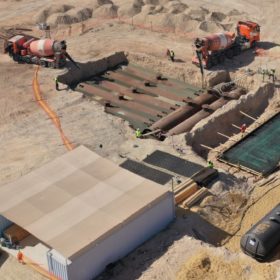
The best world regions for compressed air storage
Compressed air energy storage (CAES) may become an interesting solution for countries with weak interconnection with their neighbors, according to scientists from Finland’s Lappeenranta University of Technology (LUT). North America and sub-Saharan Africa were found to have the largest portion of suitable areas for this kind of storage technology, and Western Canada in particular, to have the world’s strongest potential.
