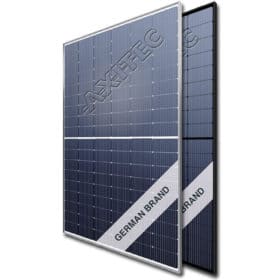
Axitec releases 540 W solar panels
German solar manufacturer Axitec has revealed plans to start selling its new half-cut PV modules from the second quarter. It manufactures the panels with 182 mm wafers.

18.3%-efficient perovskite solar cell for automatic light adjustment
Chinese scientists have powered two electrochromic devices with a perovskite solar cell based on a hole transporting material made of poly(triarylamine) (PTAA). The cell has an open-circuit voltage of 1.02 V, a short-circuit current of 22.8 mA/cm2, and a fill factor of 78.4%. When solar radiation is higher, the cells drive the electrochromic devices into a dark state, which in turn reduces the light that can enter a building.
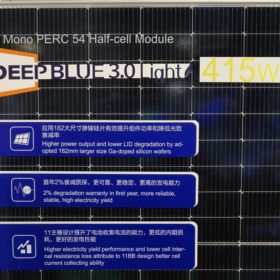
JA Solar unveils 415 W solar module with 21.3% efficiency
The module can be used for residential and commercial PV projects. It is available in five versions with power outputs claimed by the company of 390-415 W and reported efficiencies of 20.0-21.3%.

YouTube – a proven marketing platform to expand solar businesses
YouTube videos are becoming a vital part of consumers’ solar-buying journey, providing a unique opportunity for solar marketers. Marketing pro Rich Feola offers insights on how to use videos to boost your solar company.
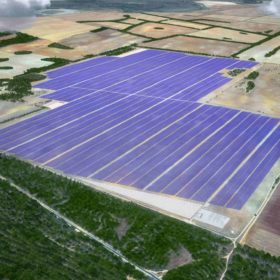
Australian state approves 350 MW/200 MWh solar+storage project
As New South Wales rapidly expands its renewable energy pipeline, the Australian state’s Independent Planning Commission process is helping to align its energy needs with community and environmental concerns.
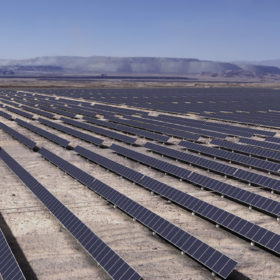
Weekly Round-Up: Gigafactory in Spain, financial close in Armenia, PPA in Sweden
Solar and storage are developing at a relentless pace and pv magazine cannot cover all the interesting developments that are announced day by day. In this weekly Round-Up, we provide a quick review of all facts and deals that should not be off of our readers’ radar.
US government wants to cut solar costs by 60% in 10 years
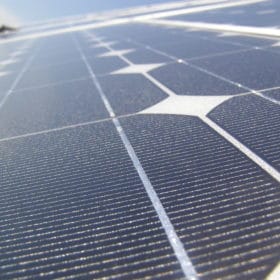
The US Energy Department set a goal of achieving 2 cents/kWh by 2030, and announced an initial $128 million in funding to support technology development.

SMA exceeds €1bn in sales for first time since 2012
German inverter manufacturer SMA has managed to shake off the impact of the pandemic by posting strong revenue and profits for 2020.

Adriatic Sea to host 100 MW offshore PV plant
Italy’s Saipem is planning what could be the world’s largest offshore PV plant — a 100 MW facility located off the coast of the Italian northern region of Emilia-Romagna. The project, whose approval process began two years ago, is expected to become operational by the end of 2025.
How much floating PV is enough?
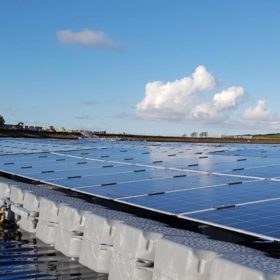
Scientists in the UK have had a closer look at the impacts of floating PV systems on the water. They found that their cooling effect on water mitigates blooms of toxic blue-green algae and increased water evaporation, which are both caused by global warming. They also warned, however, that colder water may result in a reduction of the duration of so-called thermal stratification. The right proportion between the surface occupied by the PV array and a water surface’s total area is key for addressing this issue.
