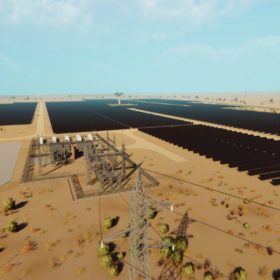
20 MW/5 MWh solar-plus-storage project set to begin construction in Malawi
The Golomoti solar plant is expected to come online in 2022. The plant will be used to provide grid stability and reduce national dependence on diesel generators and hydroelectric generation.

III-V multi-junction solar cell with 39% efficiency
Finnish scientists have developed a four-junction solar cell based on III-V semiconductor materials that is said to be able to achieve a wide spectral coverage. The cell was monolithically grown on gallium arsenide by molecular beam epitaxy (MBE).
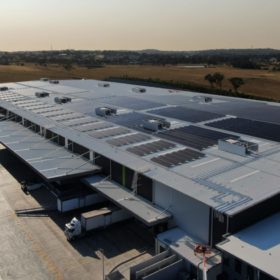
Australia’s largest energy provider acquires solar installers
AGL has revealed plans to acquire Epho and Solgen Energy Group, which will make it Australia’s largest climate polluter and its largest commercial solar provider.
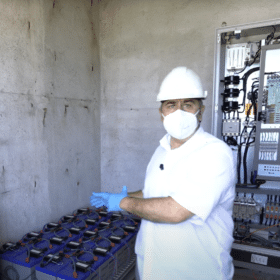
New power electronic device to manage surplus solar power–Part II
The first pilot tests have been conducted for the EU-funded project ‘renewable penetration levered by efficient low-voltage distribution grids (RESOLvD). pv magazine has looked into the demonstrator and the related energy sharing algorithm.
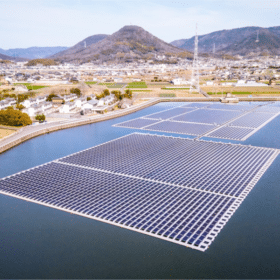
Sumitomo Mitsui Construction deploys in-house floating PV tech
Sumitomo Mitsui Construction has used its PuKaTTo proprietary tech for a 2 MW floating PV project in Japan’s Kagawa prefecture. It said its durable, easily deployable floats can host 60-cell and 72-cell solar modules.
Hybrid operational strategy to use lithium-ion storage in commercial PV arrays
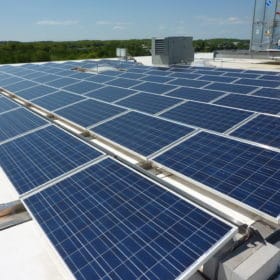
Lithium-ion batteries can not only improve self-consumption in commercial PV systems but are also able to efficiently perform peak shaving and price arbitrage, according to an international research group which has proposed a new strategy to calculate the best system configuration in terms of costs and revenue. The scientists specified, however, that the novel strategy may become effective only if storage system prices will drop under $250/kWh.

First Solar signals interest in US tellurium supplies for solar panel production
Rio Tinto plans to spend nearly $3 million on a facility in Utah to recover tellurium, a critical mineral used in solar panels.

Passive solar module cooling based on hydrogels beads and nanofluids
A British-Egyptian research group has tested the use of hydrogels beads for PV module cooling. The micro-sized particles were saturated with aluminium oxide (Al2O3) water-based nanofluids and placed below the simulated PV panels. The experiment showed, according to the scientists, that the hydrogels beads were able to significantly reduce the temperature by between 17.9 and 16.3 degrees Celsius.
Hard times for french PV module maker Photowatt
According to French financial newspaper Les Echos, EDF, the main shareholder of PhotoWatt, is considering closing the production in Bourgoin-Jallieu. The Auvergne-Rhône-Alpes regional council is mobilizing to save the company and announces that a regional company may acquire the module manufacturer.

South Korea wants to deploy another 2.1 GW of floating PV by 2030
The country’s Ministry of Environment has revealed that five dams have already been identified for a total of 147 MW of projects. The new target is part of South Korea’s plan to become carbon-neutral by 2050.
