
North Macedonia announces 60 MW solar tender
The procurement exercise has been planned for the first quarter of the year.
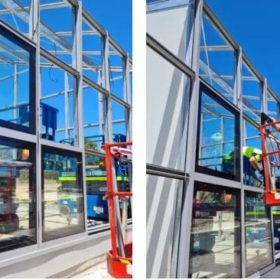
Transparent PV-based greenhouse takes shape in Australia
Western Australia-based solar glass developer ClearVue has commenced installation of its transparent solar PV glazing panels at what will be the world’s first clear solar glass greenhouse.
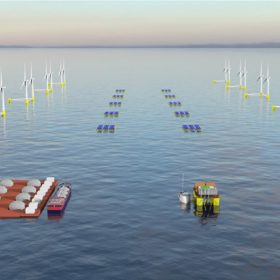
Offshore hydrogen production powered by floating PV
Spain’s Repsol will develop a €4.5 million ($5.5 million) pilot project to produce green hydrogen with floating PV for the Santander Port Authority. It will be completed in December 2023.
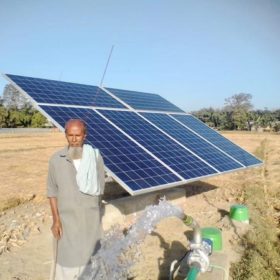
India launches tender for deployment of 317,975 solar pumps
The tender was launched by Energy Efficiency Services Limited (EESL), an energy service company owned by the government of India.
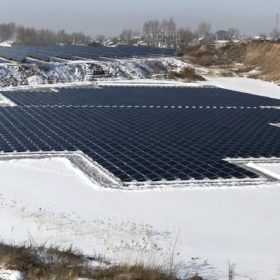
What happens to floating PV when the water surface freezes?
What happens to a floating PV system located in cold climates during freezing temperatures? How is the plant handled and which kind of risks could be associated with these unfavorable climatic conditions? We have sought to answer these questions with the help of Kane Wang, manager of Sungrow Floating’s system solution department.
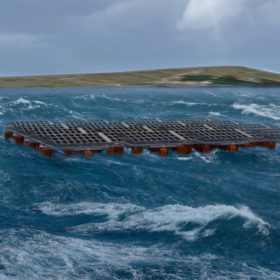
Equinor, Saipem test offshore solar in Norwegian Sea
The two companies want to test a floating PV array under harsh weather conditions in rough waters for at least a year. The system will be based on a floating solar technology developed by Maritime Moss, a unit of Saipem.
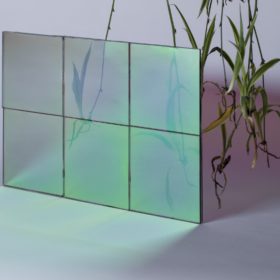
Germanium-based solar cell tech for agrivoltaics
German scientists have fabricated an enhanced amorphous germanium PV cell that confines light in an ultra-thin absorber. It has the potential to combine PV with photosynthesis in new solar applications on bio-reactors, greenhouses, and agricultural land.
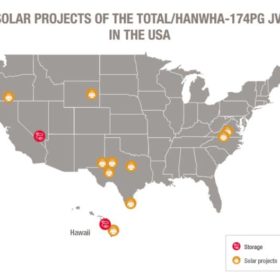
Total, Hanwha Group to build 1.6 GW of solar, storage in US market
French energy giant Total called the 50:50 joint venture a “first significant step” into the U.S. utility-scale solar market.

Fraunhofer ISE develops technique to produce glowing colored solar modules
The German research institute has proposed a technique based on the surface structure of the wings of the morpho butterfly to produce colored BIPV panels for facades and rooftops. The process is claimed to make it possible to color the modules with an optical effect and not with color pigments, which reduce their efficiency.
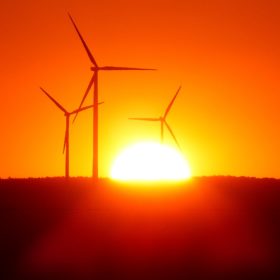
Complementary hybrid PV systems can reduce reliance on storage
Looking back over years of research into the topic of hybrid systems based on different combinations of solar, wind, hydro and other renewables, an international group of scientists found strong potential for strategies to exploit complementarity between the different sources integrate more intermittent renewables onto regional and national grids. The scientists present a series of conclusions and recommendations that aim to push research in hybrid renewables forward.
