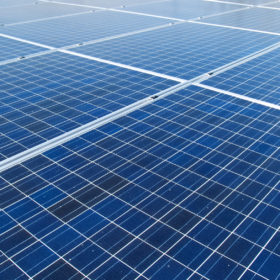
Omani oil provider switches on 100 MW solar park
The PV plant is located at Amin, in the southern desert region of the sultanate. The project, tendered by Petroleum Development Oman in early 2018, was built by a consortium led by the Japanese Marubeni conglomerate.

Italy’s second renewables auction secures lowest price of €0.056/kWh
The utility scale renewable energy tender saw wind prevail again, with 18 projects with a total generation capacity of 406 MW. Solar secured four projects with a combined capacity of 19.3 MW but did offer the lowest bid.
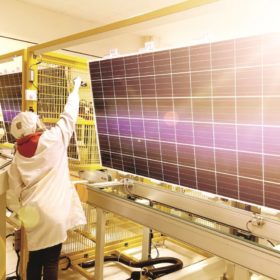
Canadian Solar sees turnover and profits surge
The Chinese-Canadian solar manufacturer reported a 41% year-over-year increase in total module shipments to 2.2 GW in the first quarter. Revenue grew by 70% to $826 million, while net profit improved significantly from $17.2 million to $110.6 million.
Dutch grid operators won’t have to compensate for deactivated solar rooftops
Minister of economic affairs and climate change, Eric Wiebes, has written to parliament to confirm grid companies do not have to pay PV system owners when their installations are disconnected from the network due to capacity issues or poor-quality voltage.

Israeli national lottery supports rooftop PV program with $0.12/kWh feed-in tariff
The incentive scheme awards a 23-year, $0.12/kWh feed-in tariff to rooftop arrays with a generation capacity of up to 200 kW. Already, 141 municipalities have applied to install 116 MW of rooftop solar capacity and the government has increased the program’s budget from $28.5 million to $143 million.

Albania’s 140 MW PV tender concludes with final price of €0.02489/kWh
The project was awarded to French developer Voltalia. The plant will be located in the Karavasta area, in the centre of the country.

Another Romanian oil company unveils solar plans
Romanian petroleum transport services provider Conpet announced plans to install PV plants across five of its facilities. Initial investment will be limited to 3 million ROL ($680,000), but the group aims to create a renewable energy business unit under its 2020-2025 strategy.

Malta launches 15 MW solar tender
The government wants to procure several 1 MW-plus solar plants. The tender is the third of its kind, and part of the 50 MW incentive scheme the island’s government launched in November 2017.

Norway deployed 51 MW of solar in 2019
The figure took the nation to a cumulative 120 MW at the end of the year, according to figures published by Norwegian solar industry organization the Solenergiklyngen. Around 2 MW of the capacity added in 2019 came in the form of off-grid projects.

Schletter increases production capacity in China
The German mounting system maker has expanded its production capacity in Shanghai after opening a new, bigger fab in March.
