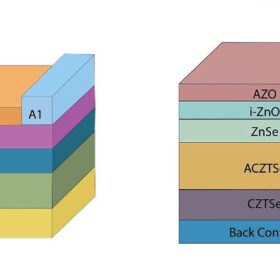
New design for kesterite-kesterite tandem solar cells promises 24% efficiency
Scientists in China have designed a kesterite-kesterite solar cell with an optimized structure that may potentially achieve efficiencies nearing those of crystalline silicon PV devices. They improved the performance of the two subcells by adjusting band alignment at interfaces, selecting proper buffer layers, and adding a double layer to both devices.

Australia targets 32 GW of renewables with investment scheme
Australian Energy Minister Chris Bowen has announced a major expansion of the Commonwealth-funded Capacity Investment Scheme that will now target 32 GW of renewable generation and storage capacity to support the nation’s clean energy transition.

Soltec introduces hail defense algorithm for solar trackers
Hail losses in the United States exceeded $1 billion in 2021.
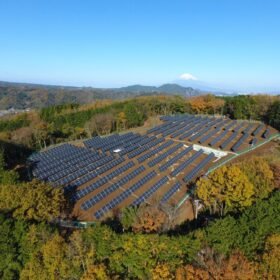
Solar potential of tough terrain
Nextracker has specifically designed solar tracker solutions for the challenges of the Indian landscape, by addressing issues such as undulating terrain and fluctuating irradiance conditions at utility-scale sites, Vice President and Managing Director Rajeev Kashyap tells pv magazine.
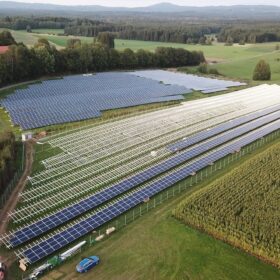
DIF Capital Partners to acquire 60% stake in Dutch solar developer Novar
Dutch fund manager DIF Capital Partners has signed an agreement to purchase a majority of Dutch solar project developer Novar for an undisclosed sum.

Italy’s January-September solar installations hit 3.5 GW
Italy deployed more than 3.51 GW of new solar in the first nine months of 2023, bringing its cumulative installed PV capacity to 28.57 GW at the end of September, according to the national energy agency.
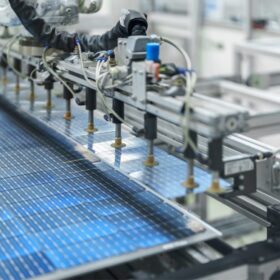
Voltec Solar secures funds to make perovskite-silicon tandem modules
Voltec and the Institut Photovoltaïque d’Île-de-France (IPVF) plan to set up a pilot line for their new tandem panel tech in 2023 and their first 200 MW industrial demonstrator in 2025. They also plan to increase the factory’s capacity to 1 GW in 2027 and 5 GW by 2030.
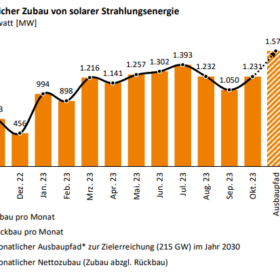
Germany’s January-October solar capacity additions hit 11.7 GW
Germany installed 11.7 GW of new solar capacity between January and October 2023, with 1.23 GW added in October alone, bringing the nation’s cumulative installed solar capacity to 79.2 GW.
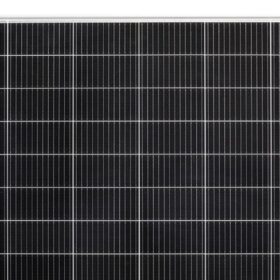
Fraunofer ISE, Heckert Solar present Made-in-Germany rooftop solar panel
Fraunhofer Institute for Solar Energy Systems (Fraunhofer ISE) and Heckert Solar have developed a rooftop solar panel in Germany. The 400 W module, featuring M12 half cells, boasts an efficiency of 20.5%. The collaborative effort led to the establishment of a brand-new production line dedicated to this module series.
Only 3 Portuguese energy communities operating despite massive demand
The European Commission first set up the rules for energy sharing communities in 2018 and 2019, with Portugal rolling out its own legislation soon after. Despite these efforts, five years on there are only three energy sharing communities legally operating in the Mediterranean country, with hundreds more stuck in a year-long regulatory backlog, one local engineer tells pv magazine.
