
Bosnia and Herzegovina poised for solar
Bosnia and Herzegovina’s southern region is primed for “huge” utility-scale solar development, Assistant Professor Farooq Sher tells pv magazine. He came to this recent conclusion after two years of researching the Balkan country’s current renewable energy capacity and potential.
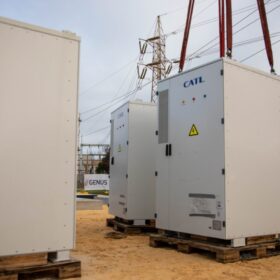
Quinbrook targets 10 GWh battery rollout after signing CATL supply deal
Australia’s Quinbrook Infrastructure Partners has signed a supply deal with Chinese battery manufacturer CATL that is expected to support the deployment of more than 10 GWh of energy storage systems over the next five years.
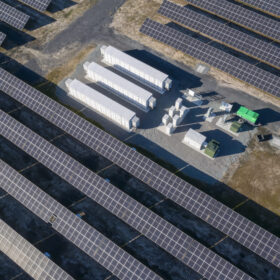
SJVN wraps up 1.5 GW renewables, storage tender with $0.053/kWh tariff
Seven Indian developers secured 1.184 GW of cumulative capacity in an SJVN auction for 1.5 GW of firm, dispatchable power. The winning developers will build renewable energy projects supplemented with storage systems across India.
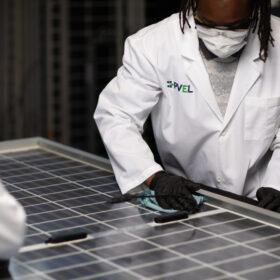
PVEL upgrades solar module qualification testing
PV Evolution Labs (PVEL) says it has added new solar module qualification tests and fresh insights to improve intelligent module procurement strategies.

Perovskite-silicon tandem cell achieves 28.9% efficiency via high bandgap top perovskite cell
A group of international researchers has developed a new perovskite-silicon solar cell design using a top perovskite PV device with an energy bandgap of 1.67 eV and a new self-assembly monolayer based on carbazole. The tandem cell achieved a higher efficiency compared to counterparts without the monolayer and passed the IEC 61215 standard thermal cycling test.
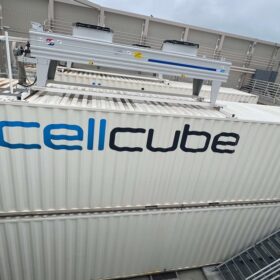
Solar-plus-storage outperforms diesel in US military survival analysis
The US Department of Energy’s National Renewable Energy Laboratory (NREL) has determined that Antora Energy’s solar-plus-storage system meets the US military’s stringent standards, as it significantly outperforms emergency diesel generators in survivability probabilities.
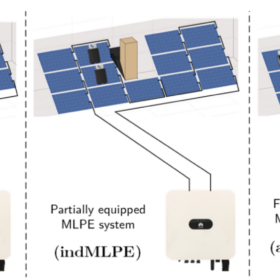
Maximizing photovoltaic system performance: Insights on partial shading and power electronics
Optimizing PV systems in partial shading conditions presents a multifaceted challenge, demanding a comprehensive understanding of the interplay between power electronics and PV technology. Shading scenarios exert a significant influence on system performance, with practical insights tailored to various shading conditions, offering guidance for stakeholders in PV planning. Collaborative efforts within the PV industry are directed at enhancing planning tools, seeking to streamline and improve the accuracy of PV system designs, and ultimately contribute to a more sustainable energy future.
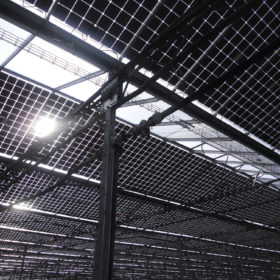
Satellite method estimates albedo for bifacial PV systems in ‘worst-case scenario’ areas
Scientists in the UK have utilized data from two different satellites – Sentinel-2 and MODIS – to develop a new and more accurate approach to estimated albedo for bifacial PV systems in complex landscapes. The novel methodology reportedly achieved a much lower normalized root mean square error than reference methods relying on MODIS only.
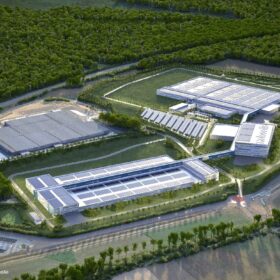
Heraeus buys stake in French solar manufacturer HoloSolis
HoloSolis plans to build Europe’s largest PV factory – a 5 GW solar plant in France – by 2025. Heraeus will provide its latest metallization technologies for the factory and play an active role on the HoloSolis board of directors.
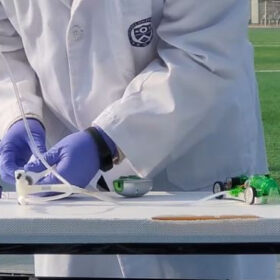
Algae photovoltaics for hydrogen production
South Korea researchers have developed a cell by merging green algae with carbon nanofibers, in order to generate 9.5 W per cell and achieve a peak efficiency of 0.9%. They claim this is enough to power a micro-generation system for hydrogen production.
