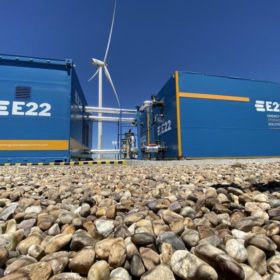
Australian miner tests vanadium redox flow battery technology
Australian miner IGO is building upon its renewable energy options at its Nova nickel operation after signing an agreement with Perth-based energy storage company VSUN Energy to test a hybrid standalone power system backed by a vanadium redox flow battery.
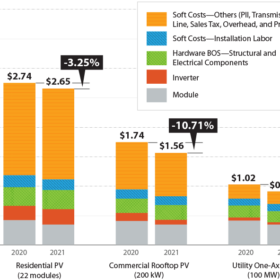
Costs falling for all PV systems in US market, says NREL
The U.S. National Renewable Energy Laboratory says in a new report that costs for all types of PV systems continue to fall, although it notes that balance-of-systems costs have increased or remained flat across sectors this year.
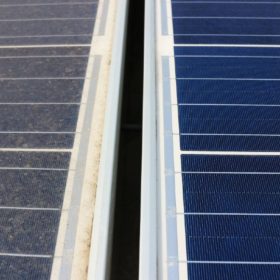
Hydrophobic anti-soiling coating for solar modules
A U.K. research group is developing an anti-soiling solution produced via a chemical process compatible with glass manufacturing. The Engineering and Physical Sciences Research Council is providing $1.6 million of funding for the project.

Chile wants to export solar energy to Asia via 15,000km submarine cable
The Antípodas project was announced by the Chilean government last week. It is aimed at taking advantage of the huge solar potential of the Atacama Desert, which is the world’s region with the highest solar radiation.

Switzerland allocates $488.5 million for solar rebates in 2022
This year, more than 18,000 photovoltaic systems, totaling around 360 MW, have already been registered for the one-off payment. The rebate covers around 20% of the investment costs, depending on the system performance.

Indian transformer manufacturer to set up 4 GW solar fab
Shirdi Sai Electricals, an Indian transformer manufacturer and EPC contractor, has placed a $252.16 million incentive bid to set up a fully integrated, 4 GW polysilicon-to-module fab under the Indian government’s production-linked incentives scheme.
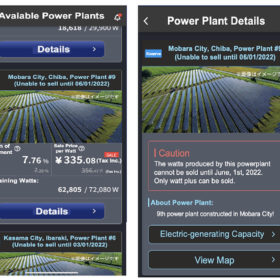
New app from Japan enables users to invest in utility scale PV starting from $2.2/W
The app is currently available only in Japan and its developer – Change The World – is now planning to bring it to the U.S. market. The app is purportedly enabling annual investment return of around 7% for projects under Japan’s feed-in tariff scheme.
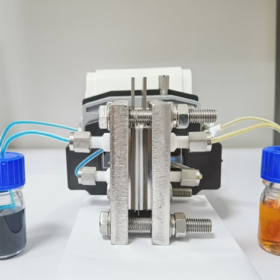
Redox flow battery with capacity retention of 99.98% per cycle
The battery was fabricated by Chinese scientists with a low-cost electrolyte made of a derivative of TEMPO, which is a well-known electroactive aminoxyl radical used with several applications in chemistry and biochemistry. According to the researchers, the battery shows high redox potential and is crossover-free.
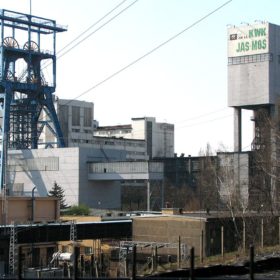
Poland’s largest PV plant comes online
Built by Polish energy producer ZE PAK, the 70 MW solar plant will sell solar power to Polish telecommunications group Polsat under a 15-year power purchase agreement.
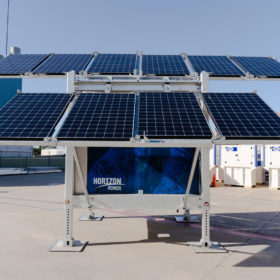
Distribution networks to shrink as safety, reliability of standalone solar improves
Western Australia leads the world in successfully implementing renewables-based generation for far-flung customers. Boundary Power has been widely recognized for its innovations and is ready to repeat its successes with standalone power systems across Australia and the Asia-Pacific.
