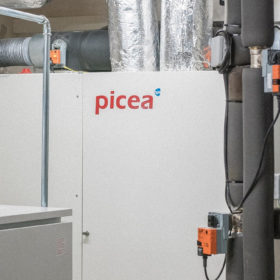
Hydrogen-based storage system for residential applications
The system is based on a power-to-gas hydrogen technology and is intended to enable one and two-family homes to have an independent power supply throughout the year.

The Hydrogen Stream: US government wants to reduce green hydrogen cost by 80% to $1 per kilogram in one decade
Furthermore, Swiss energy company Axpo and Swedish-Swiss electrical equipment giant ABB committed to combining their technologies and skills for several projects related to green hydrogen in Italy and Germany’s gas transmission system operators Gascade and Ontras announced a plan to set up a platform for the hydrogen industry in eastern Germany, with an initial grid to cover 475 kilometers of pipelines.
Chinese PV Industry Brief: Canadian Solar plans 3 GW inverter factory
Moreover, Linyang Energy announced a plan to build a 10 GWh lithium-ion battery manufacturing facility in Qidong city, Jiangsu province. Chinese state-owned lender China Development Bank (CDB) has allocated RMB500 billion in special loans to support projects in the energy sector to help China reach its decarbonization targets
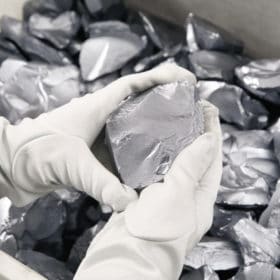
Polysilicon price rally may have reached its peak
Market analyst Bernreuter Research reports that the price of the raw material rose by around 160% from US$11/kg at the beginning of the year to $28.50/kg currently. However, following the SNEC trade show in Shanghai last week, the price rose by only 1%, which suggests a turnaround or a price stabilization may be expected.
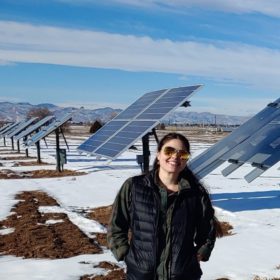
‘Where appropriate, agrivoltaics can certainly be a viable and meaningful alternative to large-scale solar’
US expert in environmental and energy policy Alexis Pascaris spoke with pv magazine about opportunities and barriers associated with agrivoltaics. Agrivoltaics are a very practical and advantageous alternative to large-scale solar, specifically in places where there are land-use constraints or needs for rural economic development, she explains. Differences in costs related to ground-mounted solar can typically be attributed to the raised racking systems or additional fencing, but these upfront investments in specialized hardware are eventually recovered as agrivoltaic systems produce dual-revenue streams.

Maldives launch tender for 40 MW/40 MWh of storage
The government of the archipelago is tendering the deployment of two big batteries, with capacities of 24 MW/24 MWh and 16 MW/16 MWh, respectively, to store renewable energy for 22 islands.
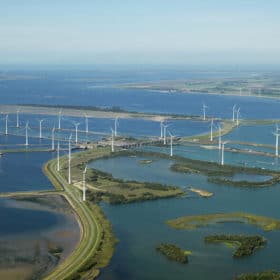
Large-scale PV to join wind power complex at Dutch dam
The project is expected to have a capacity of up to 50 MW and is set to be commissioned in 2023.

Electricity derivatives to offer power offtake certainty for investors in India
An Institute for Energy Economics and Financial Analysis (IEEFA) report says that the sale of power in the futures market will benefit renewable energy developers and distribution companies alike.
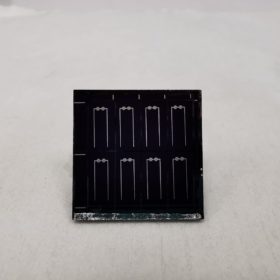
Pure sulfide CIGS solar cell with 15.2% efficiency
The device was built by an international research team. The cell features a buffer layer based on zinc sulfide oxide and a low copper absorber. The cell showed an open-circuit voltage of 920 mV. And though a different material from the widely commercialized CIG selenide PV thin films, the researchers claim similar processes could be used in its large-scale manufacturing.
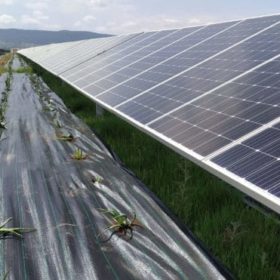
Australian solar park to host crops as part of agrisolar program
Italy’s Enel will launch an experimental agrivoltaics program at its 34 MW Cohuna Solar Farm in the Australian state of Victoria to help formulate a “best practices” template for utility-scale solar PV sites in other countries.
