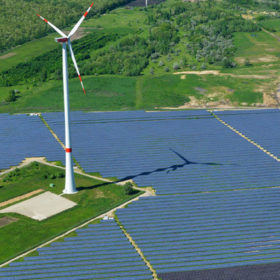
German PV tender concludes with lowest price of €0.0490/kWh
The country’s latest tech-specific PV tender was oversubscribed, but the final prices are slightly lower than those recorded in the last procurement round.
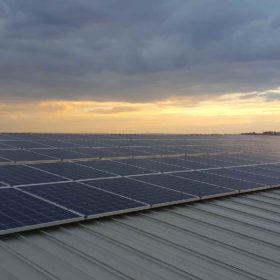
Strategies to prevent overvoltage-induced inverter disconnections
Australian scientists have identified seven methods to prevent PV losses when overvoltage-induced inverter disconnections occur. The methods include battery storage, reactive power inverters, export limits, distribution static synchronous compensators, the replacement of old conductors in power grids, load reconfiguration, and dynamic voltage restoration.
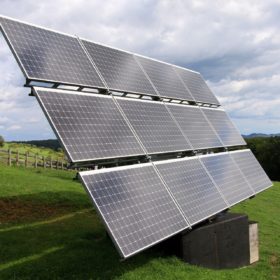
Fuzzy logic MPPT to improve PV system performance
A Pakistani-Chinese research group has demonstrated a new maximum power point tracking method, based on a fuzzy logic algorithm to provide faster results. The converter tech is claimed to have an impact on PV system efficiency and provide isolation between the load and the PV array.
Texan utility tenders 900 MW of solar, 50 MW of storage
CPS Energy has taken the first step towards bringing those volumes – plus 500 MW of firming capacity – to the Lone Star State in pursuit of the power company’s 50%-renewables-by-2040 goal.

India confirms one-year extension of solar cell import duty
The ‘safeguard’ duty will be levied on Chinese, Vietnamese and Thai solar cells – whether assembled into modules or not – at 14.9% from today and falling to 14.5% in six months’ time. Malaysian products are exempted as their imports have fallen dramatically since the duty was introduced, in July 2018.
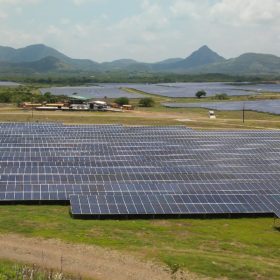
World’s largest solar project for on-site consumption
Utility Iberdrola will provide solar power to the Spanish site of Saudi petrochemical company Sabic, which has signed a 25-year power purchase agreement. The electricity will be generated by a €70 million, 100 MW solar park.

Restrictions for solar on agricultural land may slow PV growth in Taiwan
Taiwan-based TrendForce says the nation added only 410 MW of solar capacity to the end of May, towards this year’s 2.2 GW target. The lower-than-expected deployment volume may be further hampered by new restrictions for PV on agricultural land introduced by the Council of Agriculture this month.
US racking company moves manufacturing to China
Despite strong revenue growth in its domestic market, Quick Mount PV – which was acquired by Netherlands-based Esdec last year – is abandoning its U.S. manufacturing to move overseas.
Solar PPA for 39 MW in Canada
The Royal Bank of Canada has agreed to buy 80,000 MWh per year from two solar parks now under construction in the province of Alberta. They will begin supplying power in April 2021.
Temperature-based MPPT algorithm to improve PV system efficiency
Researchers in Spain have developed a maximum power point tracking (MPPT) algorithm based on just one input parameter – PV module temperature. The algorithm has already shown stability in testing, the scientists claim.
