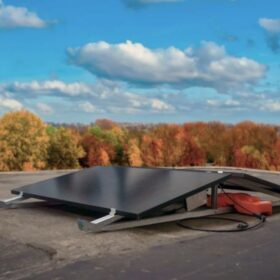
Dutch startup unveils 600 W two-module residential rooftop PV system
Netherlands-based developer of lightweight PV systems, Rable Group, claims its new rooftop PV solution can be installed in 20 minutes without the need for special permitting or modifications to the fuse box.
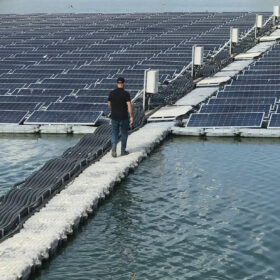
Kenya seeking consultants for 40 MW floating solar tender
State-owned Kenyan Electricity Generating Company PLC (KenGen) is accepting feasibility study applications for the development of a 40 MW floating PV array, backed by German funding.
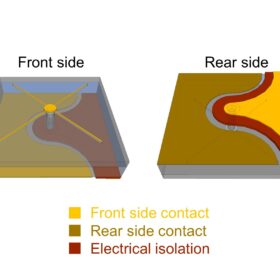
First attempt to build back-contact micrometric III-V photovoltaic cells
An international research group has utilized through-substrate-vias to create 3D interconnections in III-V solar cells with a triple-junction architecture. The novel cell design was found to have a low shading factor of below 3% and a 6-fold increase in wafer area use compared to cells based on 2D interconnects.
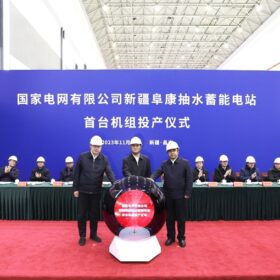
China’s State Grid commissions 1.2 GW pumped hydro project
State Grid Corp. of China has commissioned a 1.2 GW pumped hydro project, featuring three 300 MW turbines.
AmpIn Energy to build 1.3 GW solar cell, module factory in India
AmpIn Energy Transition says it plans to invest $372 million to set up more than 600 MW of renewable energy projects and an integrated 1.3 GW solar cell and module factory in eastern India.
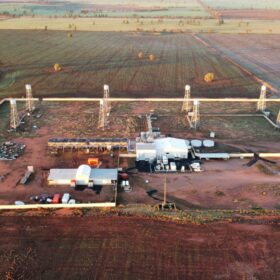
Australian startup begins work on agrivoltaic project with thermal storage
Graphite Energy, a thermal storage company, is building a facility in Australia to demonstrate how renewable energy and agriculture can co-exist through agrivoltaic and greenhouse systems.
Chinese PV Industry Brief: Polysilicon prices continue to slide
Polysilicon prices fell by as much as 3.23% in China this week, according to the China Nonferrous Metals Industry Association (CNMIA).
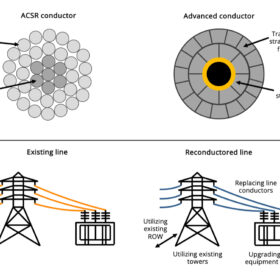
Reconductor existing transmission to ‘unlock’ renewables, says UC Berkeley study
Large-scale reconductoring of existing transmission lines could cost-effectively double transmission capacity within existing rights-of-way, a study says. Renewable energy projects near reconductored transmission lines could more easily interconnect.
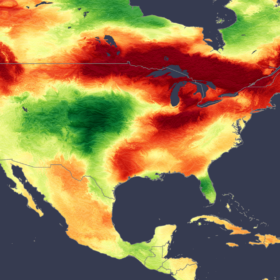
U.S. solar has less thanks to give, as El Niño pattern develops
In a new weekly update for pv magazine, Solcast, a DNV company, reports that, in November, weather patterns have started to resemble the characteristic El Niño signature, with low pressure in the northwest Pacific, and an enhanced subtropical jet stream spreading from the Pacific across the southern United States.

War in Ukraine triggered unique phase in renewables history
Human Geographer Thilo Wiertz speaks to pv magazine on the particular features that characterized the trajectory of renewable energies after the outbreak of the war in Ukraine. He emphasized how the geopolitical tensions arising from this conflict have reshaped the political debate about the energy transition, with the energy security perspective gaining in importance.
