
Italy, Greece plan 1 GW subsea interconnection cable
Italy and Greece have announced plans for a 1 GW subsea interconnection cable. The submarine cable, valued at €750 million ($794.9 million), will connect a new converter station in Galatina, Italy, with a station in Thesprotia, Greece.
Nigerian manufacturer commissions 100 MW solar panel factory
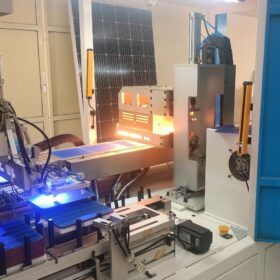
Auxano Solar has commissioned a 100 MW solar panel assembly factory in Lagos, Nigeria. It launched the project in 2016.
India’s Rsolec to build 5 GW solar wafer fab
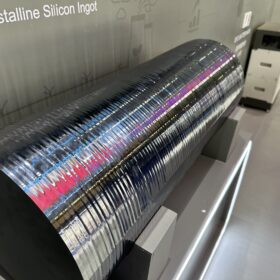
Renaissance Solar and Electronic Materials (Rsolec) says it plans to open a factory in India for solar crystal growth and wafer production. It says it will initially set up a 5 GW facility and aims to exceed 20 GW of annual capacity over the long term.
Solar PV LCOE expected to slide to $0.021/kWh by 2050, DNV says
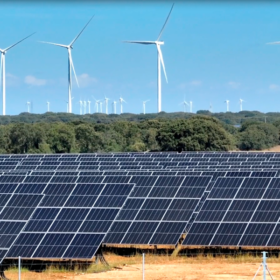
By mid-century the levelized cost of energy (LCOE) for solar PV will be $0.021/kWh, a new report by risk management company DNV predicts. The learning rate for solar is predicted to decrease from 26% to 17% by 2050.
Taiwanese startup launches PV system for remote sensors, tracking systems
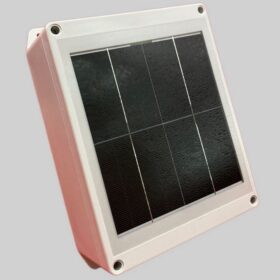
Developed by Taiwan-based Flexwave, the monocrystalline-based PV module relies on passivated emitter rear contact (PERC) cell technology and is available in two versions with a power output of 1,250 mW and 3,050 mW, respectively.
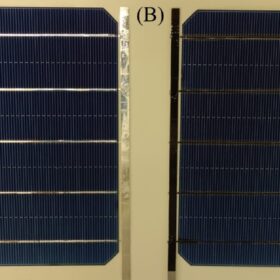
Coating metallic ribbons for aesthetic implementation of BIPV
Researchers in Switzerland have looked into three kinds of black ink coating for metallic ribbons used in PV modules. They have compared their visual stability and their effect on electrical performance.
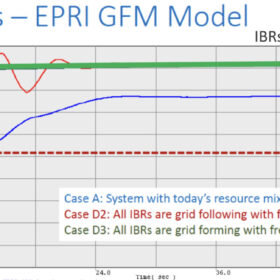
Grid-forming inverters can enable grids with renewables
As renewable energy generation grows, demand is rising for grid-forming inverters to deliver the same functions as traditional rotating synchronous generators. The UNIFI Consortium is now taking the lead in advancing the development of this new inverter technology.
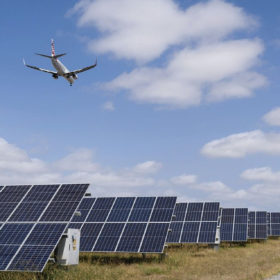
Solar, battery storage in airport electrification
Swedish researchers have analyzed the impact of electric aviation and electric vehicle (EV) charging on the power system at Visby Airport. They have discovered that on-site solar panels and battery storage could significantly reduce grid stress, and have proposed a novel approach to battery operation.
Bulgaria kicks off process for first renewables auction
The Bulgarian government has opened public discussion for the country’s first renewable energy auction. Through the procurement exercise, it expects to allocate 1,425 MW of renewable energy power generation capacity and 350 MW of storage.

Australian government approves nation’s largest battery
Australia’s federal government has granted approval for a 1.2 GW/2.4 GWh battery system – one of the world’s largest – at a site northwest of Melbourne. The project is owned by Equis Development, with support from the Abu Dhabi Investment Authority and the Ontario Teachers Pension Plan Board.
