
Antimony emerges as strong candidate dopant for Czochralski PV wafers
Researchers from Australian National University and Longi used photoluminescence imaging to analyze dopant distributions in RCz-grown silicon wafers doped with antimony, phosphorus, and gallium, finding highly uniform radial concentration profiles suitable for high-efficiency solar cells. The study also found that antimony-doped wafers provide more stable axial doping along the ingot, highlighting their potential for next-generation photovoltaic manufacturing.
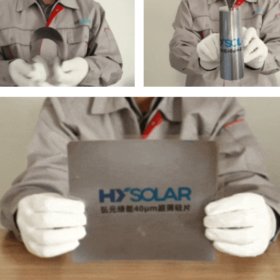
Hongyuan rolls out 40 µm ‘engineering-ready’ ultra-thin silicon wafers
Hongyuan Green Energy says it has produced a first batch of 40 µm monocrystalline silicon wafers that support full-size and half-cut formats, with slicing completed using the company’s in-house wafering equipment.
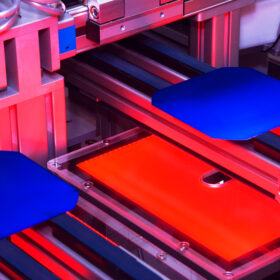
OCI Holdings acquires 65% stake in 2.7 GW Vietnamese solar wafer factory
South Korea’s OCI Holdings is entering the solar wafer business with a majority stake in a wafer plant in Vietnam valued at $120 million. The facility will produce solar wafers for the U.S. market.

New research shows cast mono wafers are still far from commercial maturity
A Chinese research team has investigated impurity and defect levels in solar cells based on mono cast wafers and have found that around 30% of the devices present an “excessive” reduction in power conversion efficiency. The scientists concluded that cast monocrystalline silicon will unlikely capture a meaningful market share in the near future.
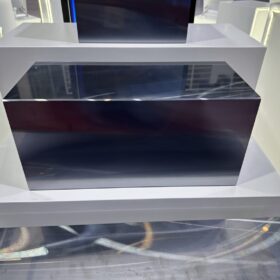
Premier Energies, Sino-American Silicon plan 2 GW solar wafer plant in India
India’s Premier Energies and Taiwan’s Sino-American Silicon Products have signed a joint venture agreement that will see the development of a 2 GW solar wafer manufacturing plant in India.
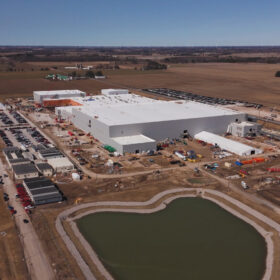
Corning to expand solar wafer manufacturing in Michigan
Corning says it will add 400 jobs and contribute domestically produced wafers to the US solar supply chain with an investment of $1.5 billion.

Myanmar earthquake disrupts solar wafer production, global supply chain
The recent 7.7-magnitude earthquake in Myanmar has disrupted solar wafer production in western China, where about 50% of the country’s wafer capacity is concentrated. Major manufacturers have suspended operations due to equipment failures, raising concerns over supply shortages and higher global solar prices.

TCL Zhonghuan-led consortium plans 20 GW ingot, wafer factory in Saudi Arabia
A subsidiary of TCL Zhonghuan Renewable Energy has signed an agreement with Saudi Arabia’s Public Investment Fund (PIF) and Vision Industries to begin producing 20 GW of solar ingots and wafers per year in the country.
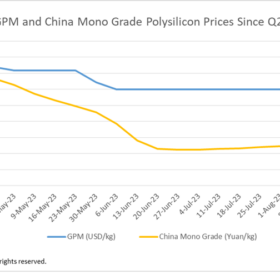
Global polysilicon prices drop, China polysilicon prices rise
In a new weekly update for pv magazine, OPIS, a Dow Jones company, provides a quick look at the main price trends in the global PV industry.
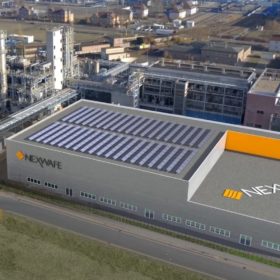
NexWafe secures funding to build wafer factory in Germany, announces new factory in Saudi Arabia
German wafer manufacturer Nexwafe is currently trying to commercialize its highly efficient monocrystalline wafer technology.
