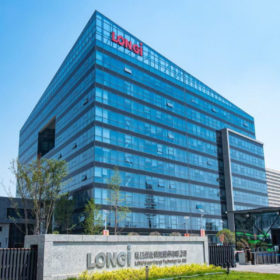
Chinese PV Industry Brief: Zhonghuan wants to increase polysilicon capacity by 120,000 MT
In other news, Shuangliang is planning to set up 20 GW of solar module production and Longi has said higher electricity prices may have an impact on its financial results.
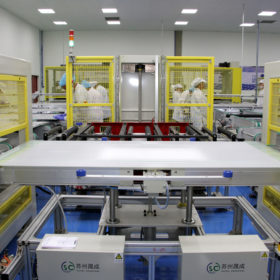
BYD increases capacity at Brazilian PV module factory
Chinese manufacturer BYD has opened a new manufacturing line at its factory in Campinas, Brazil. It will use the new line to produce PV modules with a power outputs ranging from 450 W to 670 W.
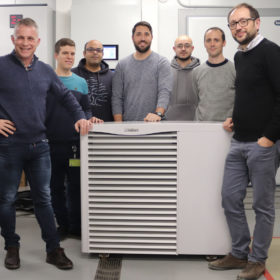
Residential heat pump produces water up to 75 C
Scientists in Spain have developed a new heat pump that can produce 6.49 kWh of heat for each kilowatt-hour of power it consumes. The device could generate hot water at a temperature of up to 75 C.
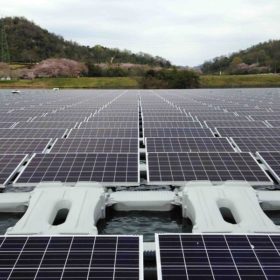
Winners, prices of Portugal’s record-breaking auction for floating PV
EDPR, Finerge, Voltalia and Endesa were among the winners of Portugal’s latest renewables procurement exercise, in which 163 MW of floating PV capacity was allocated.

Pure solid state batteries from Switzerland
Swiss Clean Battery is set to start commercial production of its pure solid state batteries in Switzerland. The batteries are based on a protected electrolyte made of a solid ion conductor, which helps to maintain internal resistance and capacity. The fixed ion conductor is formed in the battery cell itself, similar to a multi-component adhesive.
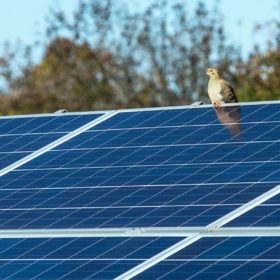
Solar power on pace to save the world
A think tank analysis suggests that if solar power keeps up its growth pace, along with wind, then the global power sector will meet its carbon reduction targets to keep world temperatures in check.
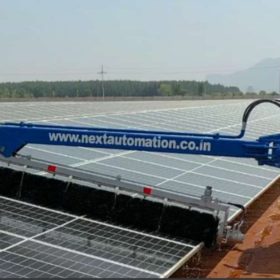
Tractor-mounted, hydraulic panel cleaning arm for solar farms
India’s Next Automation has developed a tractor-mounted hydraulically operated arm as a cleaning solution for panels in solar farms.

Fortescue buys cattle stations for 5GW renewable energy hub
Fortescue Future Industries has purchased three cattle stations in Western Australia on which it plans to build a renewable energy hub to decarbonize its mining business and export green hydrogen and green ammonia.
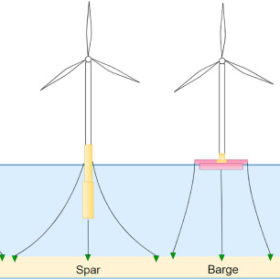
Renewable offshore floating hydrogen production
Scottish Development International and J-DeEP are developing a floating offshore hydrogen production plant off the coast of Scotland. Research shows the combination of large-scale offshore renewables and floating hydrogen production could soon become viable, depending on the project configuration.

UK government to ramp up solar capacity
Under a new energy strategy, the UK government aims to expand solar deployment by up to five times by 2035, in addition to developing 24 GW of nuclear power by 2050 and 50 GW of offshore wind by 2030.
