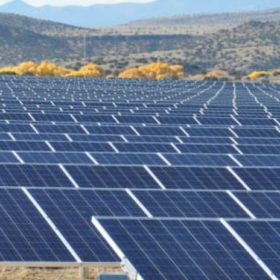
Solar+storage replaces US coal plant
The utility plans to replace the San Juan coal-fired station’s 847 MW of capacity with 650 MW of solar generation and 300 MW/1,200 MWh of accompanying energy storage.
German solar PPA market to reach 300 MW in 2020
After the slump caused by the Covid-19 crisis, the demand for subsidy-free photovoltaic projects has again picked up in Germany. By the end of 2022, German consultancy company Enervies sees a maximum potential of up to 3.6 GW for photovoltaic systems that could be implemented outside of the EEG subsidy scheme.

Nobel Prize-winning auction geniuses want to apply their findings to renewables
Stanford professors Paul R. Milgrom and Robert B. Wilson were awarded the 2020 Nobel Prize in economics for developing a new auction theory and new auction formats for goods and services. Their findings were already successfully used in the electricity energy sector and may now meet the challenge on how to better shape clean energy procurements.

Swinerton was the largest solar EPC contractor outside China in 2019
Although the Wiki-Solar website ranking only provides a snapshot of PV project engineering, procurement and construction contracts outside of China, it is nevertheless a useful indicator of the changing global solar market landscape. Of the top 11 companies, three are based in India, three in the United States, another three in Spain and two in the United States.
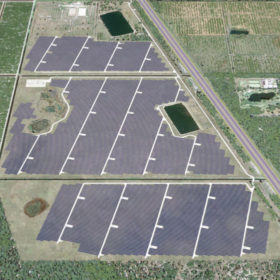
US highways have significant solar potential
A new report by the University of Texas at Austin’s Webber Energy Group looks at how much solar each US state could develop along interstate highways.
Chinese PV Industry Brief: Inner Mongolia set for 5 GW solar-storage-hydrogen complex
The China Energy Investment Corp is planning to invest RMB22 billion in a facility in the autonomous region. The state-owned mining and energy company has signed a framework agreement with the government of the city of Yijin Holo Banner for the project.
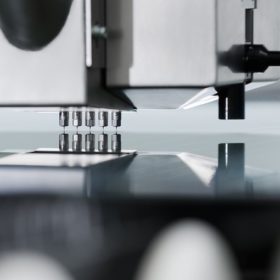
German PV equipment providers still affected by Covid-19 crisis
Orders fell more than 70% in the second quarter but China’s economic recovery is providing the basis for cautious optimism.
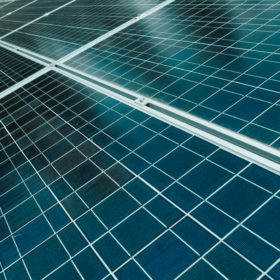
New algorithm to identify faults in PV systems
A new algorithm identifies five kinds of faults in PV systems, while also detecting when faults have been resolved to prevent false detections. It is based on the least significant difference test, which is a set of individual t-tests comparing the means of two or more pre-determined groups.
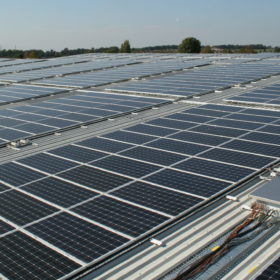
Indian businesses can assess energy transition readiness with new tool
The Portal for Renewable Energy Action Assessment Metrics is an online rating system which enables businesses to assess their renewable energy consumption.
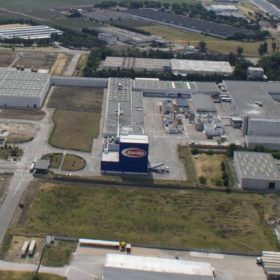
Solar tower for world’s largest pasta producer
The German Aerospace Center is working with partners in Italy to supply Italian pasta maker Barilla with electricity and heat from renewable sources.
