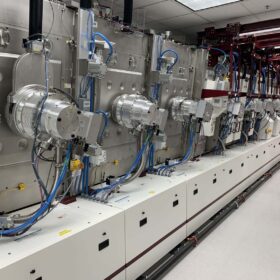
Thin-film solar patents, manufacturing equipment listed for sale
A cancelled factory led to the sale. The solar cells produced by the equipment are “game-changing tech at liquidation values,” said the seller.

Mexico announces battery storage mandate for renewable energy plants
A month after India introduced an energy storage mandate for renewable energy plants and China scrapped its own, Mexico has stepped forward with an ambitious 30% capacity requirement, alongside plans to add a further 574 MW of batteries by 2028.
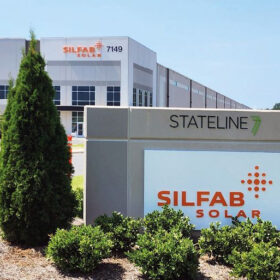
U.S. solar manufacturing moving onshore and prospering
Efforts to establish solar manufacturing in the United States, on the back of generous Inflation Reduction Act subsidies, have had mixed results. While module assembly facilities appeared swiftly, cell production capacity trails far behind and current policy uncertainty is leaving more questions than answers for solar manufacturers of all sizes.
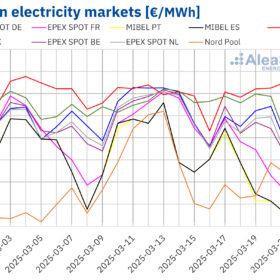
Electricity prices fall across Europe
Weekly average electricity prices dipped below €85 ($91.56)/MWh across most major European markets last week as France, Germany and Italy all broke records for solar energy production during a single day in March.

‘Flexible work arrangements, paid maternity leave, and childcare support can make a world of difference’
This week, Women in Solar Europe (WiSEu) gives voice to Elodie Colliard, director of Switzerland’s Green Giraffe. She explained she encountered her fair share of gender-based assumptions and biases. “While the disparities remain obvious and women are still a minority, I take comfort in seeing more of us join the industry, bringing our skills and perspectives to the table,” she states.

Vienna’s largest stadium completes solar array
Vienna’s Ernst Happel Stadium has completed the installation of a solar array capable of generating 3.8 GWh of energy annually, with full operation expected by the end of the year.
Axpo offtakes 60 MW from Hungarian solar plants
Swiss power producer Axpo has signed its first power purchase agreement (PPA) in Hungary for three solar plants that began operations in 2024.

China solar module price rises for fifth straight week
In a new weekly update for pv magazine, OPIS, a Dow Jones company, provides a quick look at the main price trends in the global PV industry.
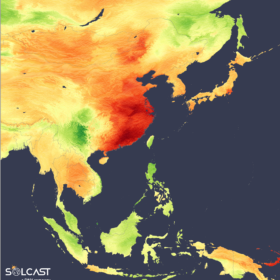
Siberian high, late La Niña onset drive sunny start to 2025 in East Asia
In a new weekly update for pv magazine, Solcast, a DNV company, says much of East Asia enjoyed a sunnier-than-usual start to the year due to a persistent Siberian high and delayed La Niña onset. However, a fully developed La Niña brought heavy cloud cover and flooding to other parts of the region, especially Indonesia.

Solar-plus-storage for extreme low temperatures
Scientists in the United States have created a testing platform for energy harvesting in solar-plus-storage systems under extreme temperatures ranging from -180 C to 300 C.
