
Brazil targets 107 GW of solar by 2035 under energy plan
Brazil has opened consultations on its PDE 2035 energy plan, which projects 107 GW of solar by 2035 – including 78 GW of distributed generation – with battery storage reaching 7 GW, or 2% of the power mix.

South Africans are ‘off-gridding’
Research exploring off-grid practices in South Africa has defined three forms of off-gridding, with reasons for being off-grid varying depending on income background, in turn highlighting that decentralized energy transitions can reproduce existing inequalities.

Denmark deploys 1.55 GW of solar in 2025
Denmark had a record year for solar deployment last year, with new additions led by an uptick in ground-mounted, utility-scale solar. Cumulative capacity now stands at around 6.3 GW.

Optimal solar module row spacing for agrivoltaics across Europe
Researchers in Sweden developed a new methodology to optimize agrivoltaic systems across Europe, showing that row pitch, system type, and panel orientation must be tailored to local climate, crops, and regulatory constraints.
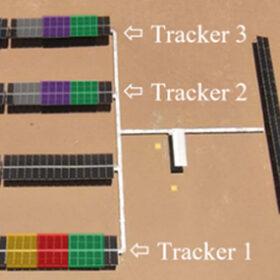
New algorithm reduces solar module temperature during clipping, curtailment
UNSW researchers have developed a thermal-aware tracking algorithm that reduces solar module temperatures and UV exposure during inverter clipping and curtailment, slowing degradation without lowering AC output. Tested in Chile’s Atacama Desert, the strategy was found to lower module temperatures by up to 7.7 C.

France plans 2.9 GW of PV tenders despite lower 2030 target
France’s new Multiannual Energy Program sets a 48 GW solar target for 2030 and outlines 2.9 GW of tenders through 2028, with industry saying the framework restores investment visibility and supports gigafactory plans.
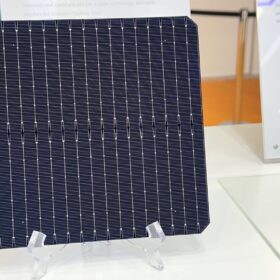
Chinese PV Industry Brief: CNMIA reports flat solar cell, module prices
The China Nonferrous Metals Industry Association (CNMIA) says wafer, cell and module prices remain stable, while industry operating rates are edging lower across leading and integrated manufacturers.

‘Women need to own their path, because growth comes from skills, not labels’
This week Women in Solar+ Europe gives voice to Iualia Meirosu, Group CFO & Board Member at Romania’s Enexus. She says that Romania’s renewable energy sector is no longer just for engineers – it’s a space where women and men can thrive across operations, finance, strategy, and project management.
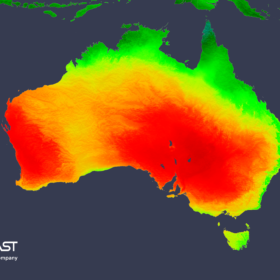
Hot, dry start to 2026 lifts Australian PV, despite fires and monsoon losses
In a new weekly update for pv magazine, Solcast, a DNV company, reports that most of Australia experienced above-average solar irradiance in January 2026 due to a hot, dry airmass and clear skies, boosting PV generation despite operational challenges from elevated temperatures, bushfire smoke, and dust. In contrast, northern Queensland and far northern regions saw significant irradiance deficits from persistent monsoonal clouds and Tropical Cyclone Koji, causing widespread rainfall and localized power outages.
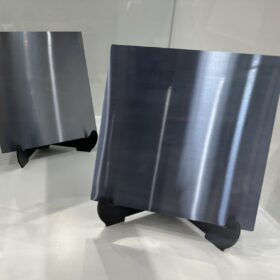
Longi builds 27.25%-efficient back-contact solar cells with high-resistivity wafers
High-resistivity silicon wafers offer superior efficiency potential but are highly sensitive to edge recombination and mechanical damage, limiting their commercial use compared to more robust standard wafers. Researchers from Longi and Sun Yat-sen University demonstrated that integrating in-situ edge passivation unlocks this potential, significantly boosting back-contact solar cell fill factor and efficiency.
