
BBDF 2025: Why time is running out for standalone storage
Regulatory shifts in Germany are narrowing opportunities for standalone storage, pushing developers toward colocated battery systems that require more complex optimization, according to industry discussions at the Battery Business Development Forum in Frankfurt.

BBDF 2025: Merchant vs. contracted strategies
The ‘Revenue models and market perspectives across Europe’ panel highlighted the complexity of Europe’s most active markets and the range of available business models. Investors show strong interest, but lenders remain cautious on risk hedging.

BBDF 2025: Europe’s battery market is still immature
From the floor of the Battery Business & Development Forum 2025, the first session delivered insights around investment strategies in battery energy storage systems across Europe and the UK.
EU renewable energy up 3.4% in 2024 as coal hits record low
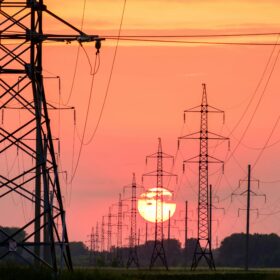
Renewables accounted for 47.3% of electricity generation in the European Union in 2024, driven by a 7.7% year-on-year increase in output, according to data from Eurostat. Fossil fuel-fired power fell to 29.2% of the mix, while nuclear contributed 23.4%.

SolarPower Europe calls for tough cyber rules following Danish import probe
The recent discovery of unexplained components in Danish energy equipment highlights the urgent need for stronger EU solar cybersecurity rules, according to SolarPower Europe.

Hidden devices found in Chinese-made inverters in the US, reports Reuters
US officials are reassessing the risks posed by Chinese-made devices in renewable energy infrastructure according to news agency. Reuters cites two unnamed sources, who would only provide a few details.
SolarPower Europe expels Huawei amid EU bribery probe
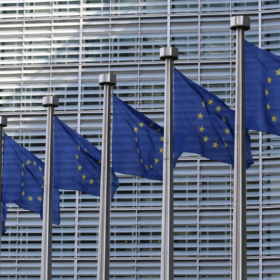
SolarPower Europe (SPE) has dropped Huawei as a member amid an EU corruption investigation, as the European Commission moves to sever ties with trade groups representing the Chinese tech giant. The decision marks the first such removal by the Brussels-based solar lobby.
Indian solar manufacturing to hit 160 GW of modules, 120 GW of cells by 2030
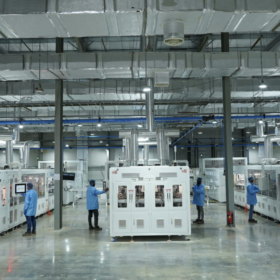
India is expected to reach 160 GW of solar module capacity and 120 GW of cell capacity by 2030, up from 80 GW and 15 GW respectively in 2025, according to a new SolarPower Europe report, with input from the National Solar Energy Federation of India (NSEFI).

Key takeaways from SolarPower Europe Summit
More than 500 solar leaders met in Brussels this week for the SolarPower Europe Summit to discuss energy flexibility and EU policy. The EU energy chief said the Affordable Energy Action Plan could save €2.5 trillion ($2.7 trillion).

‘Without energy storage, renewables are not serious power plants’
Chinese inverter and energy storage maker Sungrow invited 300 guests from 20 European countries to its ESS [energy storage system] Experience Day event in Munich, Germany. Discussions focused on energy storage, projects, market figures, and the energy transition. The conclusion: More storage and grid expansion are needed.
