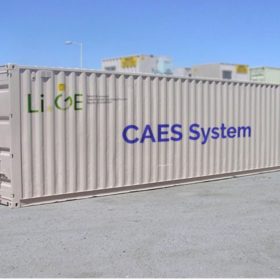
Australian utility tests compressed air storage
Compressed air energy storage is not exactly a new technology, but recent months have seen it get a new lease on life, as intermittent renewable sources of energy come to the fore.
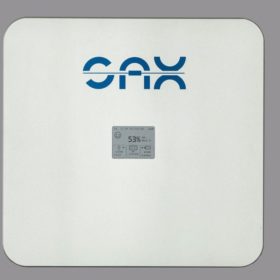
German start-up offers 5.2 kWh AC battery that works without inverter
Sax Power has developed a new residential battery which it describes as a game-changer in the battery technology.
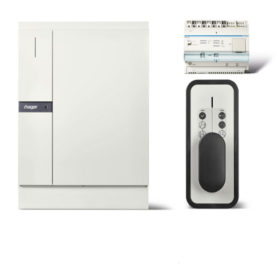
New residential lithium-ion battery from Germany
The battery system, which is aimed at increased self-consumption, can handle a maximum DC input power of 18 kW and 1000 V.
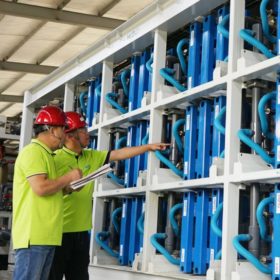
China wants to test vanadium redox flow batteries
A 125 kW/500kWh storage unit will be tested by China’s National Photovoltaic and Energy Demonstration Experimental Center. The storage system will be provided by Canadian specialist VRB Energy.
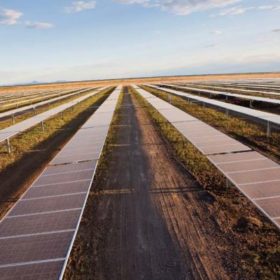
Australian state approves 600 MW solar+battery project
The authorities in New South Wales have approved a massive solar+storage project, paving the way for construction to start in the Australian state next year.
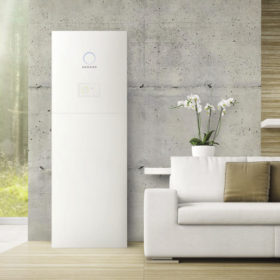
Sonnen battery still running after 28,000 full charge cycles
Sonnen has published test results indicating the longevity of its storage systems after extended use.
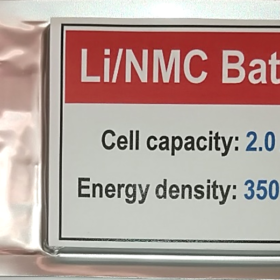
New battery chemistry tweak could double EV range
Researchers at the Pacific Northwest National Laboratory have developed a revolutionary lithium-metal battery chemistry that could allow electric vehicle batteries to almost double their capacity, while also overcoming historic setbacks.
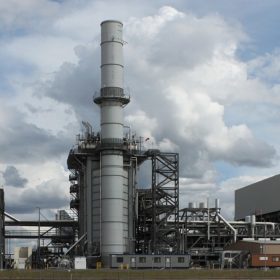
Hydrogen-fired gas turbines vs. lithium-ion storage
According to a new study from the Massachusetts Institute of Technology, hydrogen-fired gas plants will compete with lithium-ion storage for seasonal storage and their competitiveness will strictly depend on the heat rate of the gas power plants they may replace.
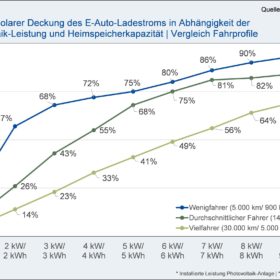
Solar+storage could provide 80% of annual EV power needs
A new EUPD Research report shows that a PV system can cover 39% of the power demand of an electric vehicle, but this potentially rises to 80% if storage is included.
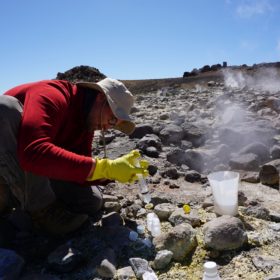
New approach promises reduced impacts in lithium mining
Research institutes in Germany and Chile are investigating the potential of extracting lithium and other minerals, as well as drinking water, from brines used in geothermal energy. The concept could greatly reduce the environmental impacts of mining in northern Chile. The project has set up a demonstration of the technology at a geothermal power plant in western Germany, and is working to identify optimal sites in Chile for further development.
