Coalitional game theory to improve P2P trading in energy communities
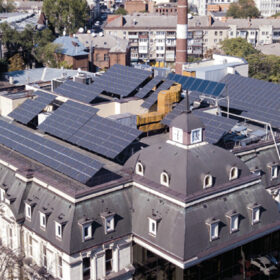
An international research group has utilized a newly designed coalitional game system to ensure economic fairness between members of energy communities. The game system considers different types of prosumers relying on stand-alone and combinations of solar and storage.
Researchers propose new models for heat pump load forecasting in energy communities
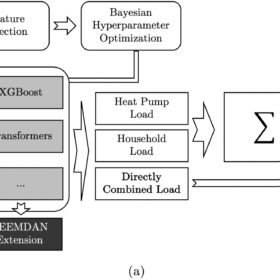
Novel research from Germany and the USA has analyzed the impact of heat pump (HP) integration on the ability of day-ahead load forecasting in energy communities. Using different models, the scientists have also investigated whether HP loads should be forecasted separately from the rest of the household or both together.
Australian grid operator backs community battery to boost network stability
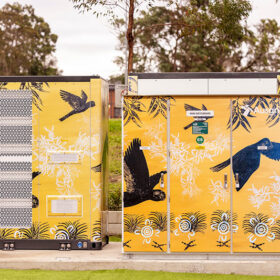
Ausgrid, a distributed network provider in the Australian state of New South Wales, has powered up its third battery energy storage system under the federal government’s AUD 200 million ($132 million) Community Batteries for Household Solar program.
California is now a batteries-based rooftop solar market
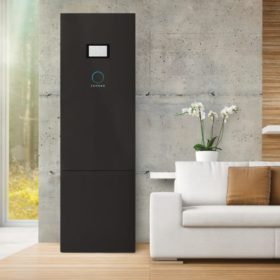
About 60% of energy customers in California have included battery energy storage with their rooftop solar installations. However, a “sustained downturn” is expected for the market.
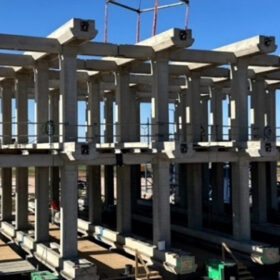
Enel, Energy Vault build 18 MW/36 MWh of US gravity storage
Energy Vault and Enel have revealed plans to build 18 MW/36 MWh of gravity storage in the United States. They say that the project will be the first large-scale gravity energy storage in a Western country.
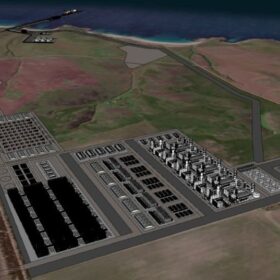
Amp Energy finalizes agreements for 10 GW green hydrogen project
Amp Energy is pushing “full steam ahead” on the development of a green hydrogen production facility with up to 10 GW of electrolyzer capacity in South Australia, after finalizing commercial agreements for the multimillion-dollar project.
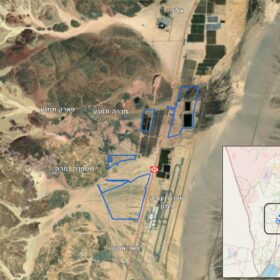
Israel to deploy 250 MW of floating solar, agrivoltaics
The Israeli authorities have proposed a plan to deploy 250 MW of floating solar and agrivoltaics through four PV plants in the Negev Desert near Ramon Airport.
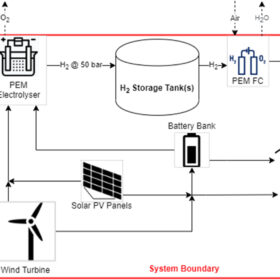
Hybrid hydrogen-battery system for off-grid PV-powered homes
Conceived by a Dutch research group, the proposed system is intended to store surplus renewable electricity via hydrogen generation and battery storage, with the latter being used only when hydrogen generation is not immediately available. Despite its high initial costs, the system can reportedly offer stable operation.

Leapton Energy launches 20.48 kWh residential battery
Japan’s Leapton Energy has developed EH-A05, a 20.48 kWh residential battery featuring storage capacities starting at 5.12 kWh, with lithium iron phosphate (LFP) batteries.

US startup debuts wall-mountable residential heat pump
US-based Quilt has unveiled a residential heat pump with a coefficient of performance (COP) of up to 4 and noise levels of 27 dBA to 47 dBA. The startup recently raised $33 million (€30 million) from a group of investors.
