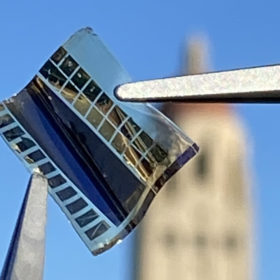
Flexible metal dichalcogenide solar cell with 5.1% efficiency
Stanford scientists have fabricated a transition metal dichalcogenide (TMD) solar cell that is claimed to overcome the typical issue of this kind of PV device, the so-called Fermi-level pinning. They used graphene contacts to mitigate this phenomenon and achieved a record power per weight of 4.4 W/g.

Grid stability and 100% renewables
New research from Stanford University professor Mark Jacobson seeks to remove any doubts about grid stability in a world powered entirely by renewable energy. The latest study models 100% wind water and solar powered grids across the United States, finding no risk of blackouts in any region and also broad benefits in cost reduction, job creation and land use.
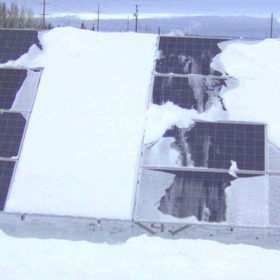
Icephobic surfaces for ice, snow shedding in utility scale solar
Developed by U.S. researchers, the proposed coating solution is claimed to effectively melt ice and snow with temperatures down to -35 degrees Celsius. It was fabricated by using medium-chain triglyceride oil to plasticize two common industrial polymer polyvinyl chlorides and tested at a pilot facility in Alaska.
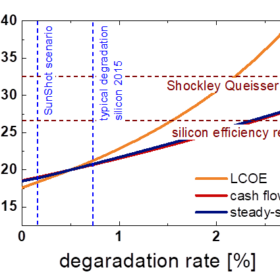
New metric for 50-year solar plant operation
A German-U.S. research group has proposed a new model to treat PV installations as permanent assets, with maintenance being performed at regular intervals. Through the new metric, it found more convenient to operate a module with 0.5% annual degradation for 35 years, and a module with 0.2% degradation, for 50 years.
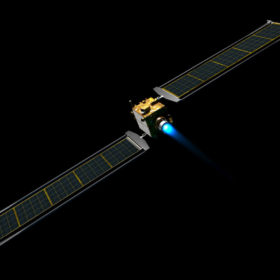
NASA to test solar-powered propulsion for asteroid defense
NASA’s Double Asteroid Redirection Test mission will roll out solar arrays and an electric propulsion system to redirect Earth-bound asteroids.

The Hydrogen Stream: ‘China, Chile, Spain and Australia will lead the hydrogen economy’
The International Energy Agency said the four nations are on track to contribute 85% of the 18 GW of global renewables capacity which is set to be dedicated to green hydrogen production by 2026. Elsewhere, the Port of Valencia has unveiled a plan to install a green hydrogen supply station in the new year.
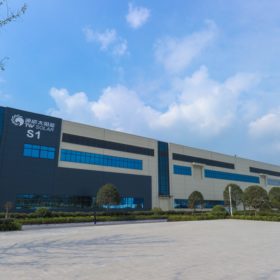
Chinese PV Industry Brief: Shuangliang secures three more wafer deals, Petro China’s 4.5 GW module deal
Shuangliang has secured supply agreements from Xinchao PV, Canadia Solar and SF Solar. Petro China wants modules for 4.5 GW of solar projects across 24 provinces.
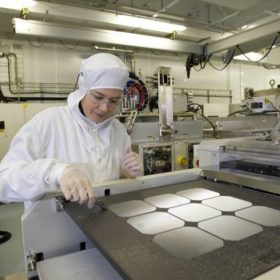
Ultra-thin silicon layers for 22.2%-efficient heterojunction solar cell
Scientists in the Netherlands fabricated a heterojunction solar cell with a layer of hydrogenated nanocrystalline silicon just three nanometers thick. The cell’s efficiency was measured at 22.2%, below the highest achieved with HJT cells, however, the researchers note that successfully incorporating this material into the cell stack will open many new doors for improvement.
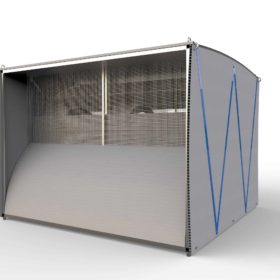
Hybrid wind-solar generator for rooftop applications
French startup Wind my Roof has developed a new wind power system equipped with two rooftop PV modules. It is currently testing a prototype in Paris.
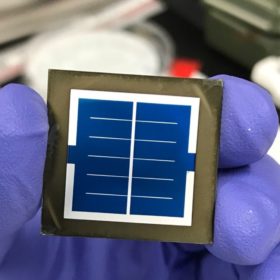
KAUST achieves 28.2% efficiency for perovskite/silicon tandem solar cell
Saudi Arabian scientists have developed a perovskite sub-cell of a tandem device with a molecule that prevents the migration of ions into the perovskite film, even under humid conditions. The solar cell has an efficiency of 28.6%.
