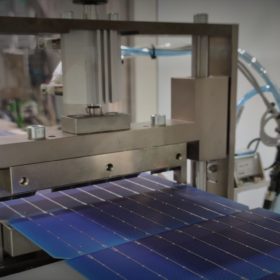
Mondragon Assembly secures licensing deal for continuous string process
Mondragon Assembly’s continuous string process technique is purportedly 10% more productive than a standard stringing machine.

Australian Vanadium moves forward with vanadium electrolyte factory
Australian Vanadium Ltd. has appointed a Western Australian engineering company to begin the first stage of what it says will be the country’s first vanadium electrolyte manufacturing plant.
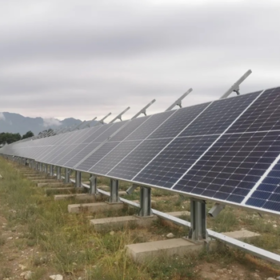
Comparing new solar module formats
JA Solar published data comparing its own modules, based on the 182mm wafer format, with others utilizing the larger 210mm size over a six month period in field testing. The data show that the smaller of the two formats reached an average daily energy yield almost 2% higher. According to JA Solar’s analysis, the higher currents produced by the 210mm modules led to higher resistance, and more energy lost as heat.

Red BIPV solar module from Italy
The module is available with wattages of 230-245 W and can reach an efficiency of up to 13.45%. The panel is part of a new series of colored products that includes silver and orange modules.

Turkey tenders another 1.5 GW of utility scale solar
The Turkish government has set a ceiling price of TRY0.40/kWh ($0.045) for the fifth procurement exercise of the Yeka program.
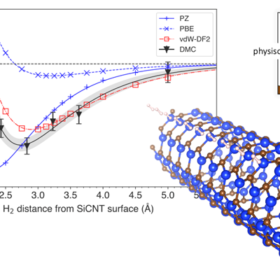
Storing hydrogen with silicon-carbide nanotubes
Storing hydrogen in carbon nanotubes and other nanostructures is still far from reaching commercial maturity. A Japanese research team, however, has developed a new simulation technology that may help better estimate the energy needed to favor the ideal interaction between hydrogen and its storage material.

How much glass is needed for terawatt-scale PV?
German scientists have assessed demand for resources such as glass and silver until 2100 and have found that current tech learning rates could be sufficient to avoid supply concerns.
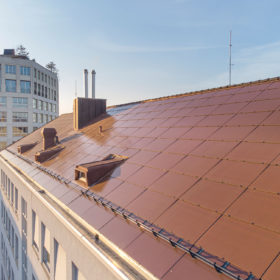
Invisible BIPV system covers building in Zurich’s city center
The BIPV installation was developed with monocrystalline solar tiles provided by Swiss manufacturer 3S Solar Plus. The product is available in different gradations of green, blue, terracotta and brown and has a power output ranging from 80 to 170 W, depending on color and size.
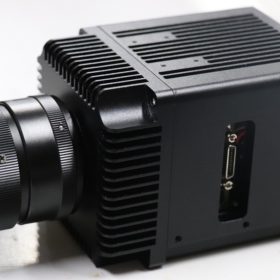
All-weather imaging tech to detect PV module faults
The system combines software that applies a modulated electric current to the PV panels and an indium-gallium-arsenide (InGaAs) photodiode detector that takes a sequence of images of the panels. According to its creators, the proposed technique works with any lighting conditions and in all weather.
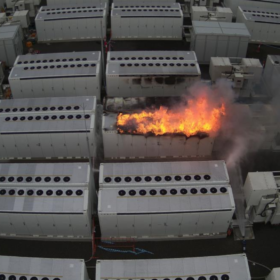
Australia’s biggest battery cleared for testing following fire
Energization testing is set to resume this week for Neoen’s 300 MW/450 MWh Victorian Big Battery, following a fire that caught global attention and destroyed two of its Megapacks on July 30.
