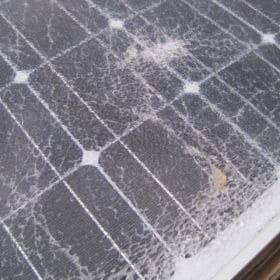
Urban land, aerosols could accelerate hail storm formation
Researchers from the U.S. Department of Energy have shown that urban landscapes and man-made aerosols have the potential to accelerate the formation of hail storms – a clear threat for PV arrays.
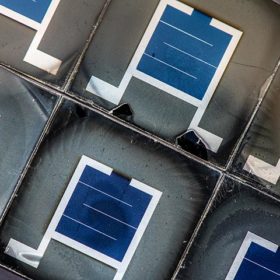
The state of the art in perovskite tandems
A new paper from scientists in China and Canada examines the recent progress in the development of perovskite-silicon tandem cells, finding a technology that’s poised for rapid commercialization, with a few research challenges still to overcome. These are primarily related to ensuring the perovskite layer can match the lifetime of the silicon cell underneath.
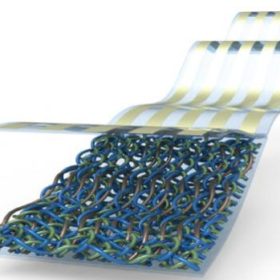
Herbicide may improve organic cell efficiency by up to 1.6%
Researchers in Saudi Arabia claim to have increased the efficiency of organic PV devices with diquat, a compound used in herbicide. The molecular diquat dopant increased optical absorption and the lifetime of electrical charges when light was absorbed.
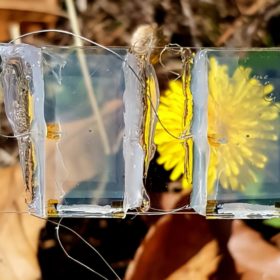
New solar window tech with 2.1% efficiency
Researchers in South Korea have fabricated a fully transparent solar cell which they claim has a transmittance for visible light of more than 57%. The integrated device generates enough power to move a small-sized motor.
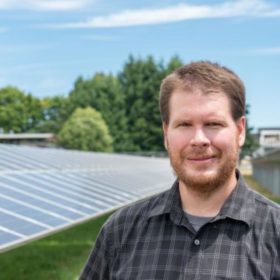
Could agrivoltaics feed demand for clean energy?
Agrivoltaics could result in more food, more energy, lower water demand, lower carbon emissions, and more prosperous rural communities, says an Oregon State University researcher. He plans to build a farm to prove the point.
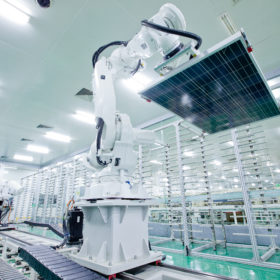
JinkoSolar claims 24.9% efficiency for n-type monocrystalline cell
The result was confirmed by Germany’s Institute for Solar Energy Research (ISFH).
Zinc-air batteries with non-alkaline, aqueous electrolytes
New battery chemistry developed in Germany promises to make zinc-air batteries the storage technology of the future.
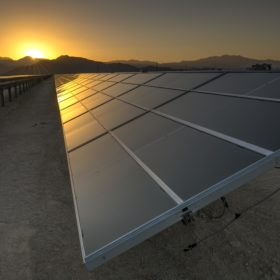
Capacity utilization a key issue in a world energized by renewables and hydrogen
A European research team has investigated the implications of renewable energy intermittency on capital utilization across a future electricity-hydrogen system, including transmission and storage infrastructure. According to its findings, idle capacity substantially increases the system costs and limits wind and solar development.
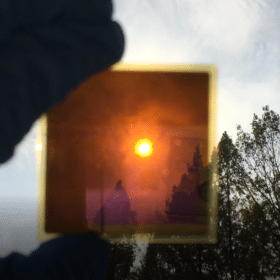
Semitransparent bifacial CIGS cell with 10.5% efficiency
The solar cell was developed by Korean scientists for power-generating window applications. They built the device with transparent conducting oxide (TCO) rear contacts and a textured polydimethylsiloxane (PDMS) layer with light-scattering and antireflection properties.

The geopolitical impact of hydrogen
In an interview with pv magazine, Indra Overland, head of the Center for Energy Research at the Norwegian Institute for International Affairs, explains how international hydrogen strategies may play out in the upcoming decades. Plans and roadmaps will not be enough to turn a hydrogen economy into reality and its success will depend on becoming cost-competitive vis-à-vis other solutions in several areas, he says.
