
Solar, batteries, wind to make up 93% of 2025 US electricity capacity deployments
The US Energy Information Administration (EIA) projects 32.5 GW of solar, 18.2 GW of energy storage, and 7.7 GW of wind will be deployed this year. These additions will make up nearly 93% of total new capacity, which is expected to hit a record 63 GW.

Key takeaways from Intersolar North America 2025
The flagship annual solar and storage conference drew over 500 exhibitors and nearly 10,000 attendees to San Diego, California, February 25-27 to advance solar and energy storage across the continent.

US added nearly 50 GW of new solar generating capacity in 2024
A new report by the Business Council for Sustainable Energy and BloombergNEF unpacks the market and policy trends facing the U.S. solar industry.
U.S. Environmental Protection Agency seeks to ‘instantly terminate’ $20 billion in clean energy grants
Administrator Zeldin said there will be “zero tolerance of any waste and abuse,” saying financial agreements under the Greenhouse Gas Reduction Fund must be “instantly terminated.”

China imposes export controls on critical minerals for thin-film PV
China has announced new export restrictions on materials essential for the thin-film solar industry, including critical minerals such as tungsten, tellurium, and indium.

U.S. surpasses 50 GW of solar module manufacturing capacity
The buildout is happening across the domestic solar supply chain and, at full capacity, planned facilities will produce enough to meet the demand for solar in the U.S., according to the Solar Energy Industries Association.

How much can I expect to save by installing solar?
The average cost of an 11 kW rooftop solar installation after federal tax credits is $20,552 in the United States, said marketplace operator EnergySage. What will your utility-provided electricity cost over the next 25 years?
U.S. adds 30 GW of PV capacity in 2024
The U.S. added 30 GW of solar in 2024 and is expected to remain the largest source of new generating capacity added over the next two years.

Where does solar stand in Trump’s ‘all the above’ energy policy?
Wind and electric vehicles have come under the crosshairs for the Trump administration, while solar has been relatively unscathed – so far.
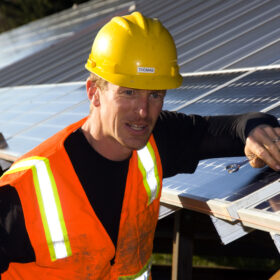
US state attorneys general urge Congress to keep IRA clean energy credits
Seventeen US state attorneys general have urged Congress to retain clean energy tax credits, citing the Inflation Reduction Act’s (IRA) “catalytic” effect on economic growth, especially in Republican districts.
