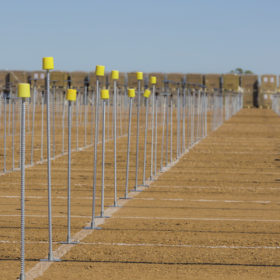
The race has only just begun
The Australian utility-scale PV and wind industries have just gone through a record two years of construction and commissioning. More specifically, writes Rystad Energy’s David Dixon, utility-scale PV has transformed from a megawatt-scale market to one measured in gigawatts. The resultant boom in utility-scale PV in the country has attracted developers, EPCs and OEMs, from at home and across the globe.

Indian fossil fuel giant NTPC tenders 1 GW of solar capacity
Developers have until November 18 to submit bids for projects anywhere in India. The projects are to be set up on a develop, build, demonstrate and transfer basis.
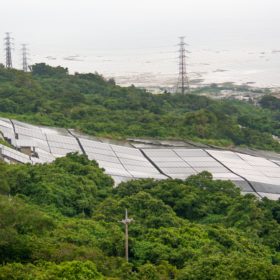
Japan proposes 22% commercial solar FIT cut in latest move to trim costs
With the transition to an auction procurement mechanism under way, Japan is this year set to expand the range of projects subject to the tender system from 2 MW-plus to 500 kW and above. With certain FIT cuts for projects with more than 2 MW capacity set to take effect in the second half of the year, the Ministry of Economy, Trade and Industry has now proposed reducing tariffs for 10-500 kW commercial PV systems.
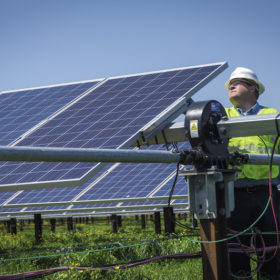
“Wall of money” fighting for U.S. solar projects
Wood Mackenzie notes that new investors and sources of capital are chasing down a limited supply of viable U.S. solar projects and sees tightening targets, expanding project appetite, and evolving techniques.
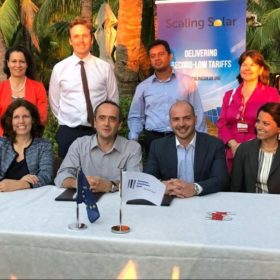
International investors provide $34 million for solar plant in Zambia
The Ngonye project proposed by Italian energy giant Enel Group and Zambia’s Industrial Development Corporation, will be financially underpinned by senior loans of up to $10 million from the International Finance Corporation, up to $12 million from IFC-Canada Climate Change Program and up to $11.75 million from the European Investment Bank.
Blockchain project Solar DAO will action its first PV plants, in Kazakhstan
The world’s first digital, autonomous, closed-end, utility-scale PV project investment fund – enabling people with any budget to become co-owners of projects – has announced the implementation of its first arrays, in Kazakhstan, with 4 MW in the north-west of the country and 4 MW in the south. Solar DAO says it will save about $50,000 per MW since total development costs will be less than $5,000 per MW.
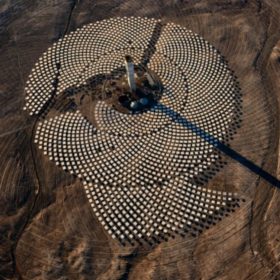
$758 million financing for the first PV-CSP plant in Latin America
Chilean company Cerro Dominador have announced the signing of a $758 million deal to finance the first combined concentrated solar power-PV project in Latin America – a 210 MW scheme in the Atacama desert
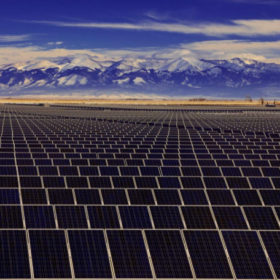
The unstoppable tide of solar illustrated by the rise of floating projects
Price deflation and technological innovation are helping solar transform the global electricity sector. A new report by IEEFA highlights the latest solar milestones around the world and charts important trends including the rise of floating solar and the corporate PPAs helping the tech giants ‘green’ their energy-hungry data centres.

ET Solar selected for utility-scale projects in Palestine
The Chinese solar manufacturer and project developer has been selected to build, operate and maintain two utility-scale PV plants in Palestine.
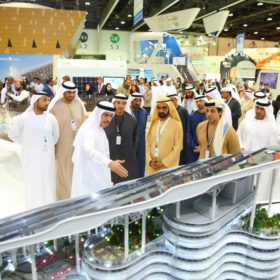
WFES 2018: Three trends driving PV in MENA
Two weeks ago, the 8th World Future Energy Summit opened its doors in Abu Dhabi. The conference and trade show comprised six co-located events across the cleantech spectrum, and attracted over 33,000 visitors across four days. The rapid increase in the scale of activity within the solar sector in the region was on display throughout the show. Here are three key takeaways from WFES 2018.
