
EU data protection rules could kill VPPs and other new business models
Ursula von der Leyen’s newly-appointed EU Commission is facing an early test of its credentials with the European Council caught in the crossfire over citizen data rights. The renewables industry voiced fears yesterday, at a digitalization conference in Berlin, that overstrict data protection rules could kill data-driven business models while the media is set to portray any perceived weakening of the legislation as evidence of EU lawmakers being in thrall to the Silicon Valley internet giants.
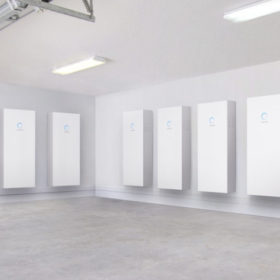
Sonnen household battery owners offered revenue from grid balancing services
The German storage system provider intends to use its ‘Sonnen-Flat’ payment package to help customers benefit from the proceeds of its virtual power plant.

Centrica’s local energy market in Cornwall pioneers third-party grid flexibility procurement
With hundreds of homes and businesses having received solar-plus-storage systems and monitoring equipment, an algorithm is managing a market for flexibility and capacity in Cornwall. Homeowners with storage can place bids to sell energy from their systems to the distribution system owner on an intraday basis.

Moixa reaches 100 MWh of virtual power plant capacity in Japan
The company says its network is the largest fleet of batteries under virtual power plant management worldwide.

China’s aluminum smelters alone could shift 2.3% of daily electricity demand
German energy agency Dena has found China’s smelter fleet could shift 432.5 GWh of daily demand to more amenable hours to tally with renewables generation. To make it happen though, the regulator needs to lay down rules for providing incentives.
National program to drive virtual power plant participation in Australia
The scheme will test the potential of distributed energy resources such as rooftop systems, battery storage and controllable load devices aggregated into VPPs to provide scalable energy and network services traditionally performed by large scale, conventional electricity generators. With registration open, the Australian Energy Market Operator wants VPPs to register to accelerate shared learning.

Japan’s ENERES developing virtual power plant with 10,000 assets
The energy services firm will use software from California’s AutoGrid to develop a VPP which will draw on PV generation, energy storage and demand response technology. ENERES wants businesses to come on board and burnish their renewables credentials.

Statera announced as partner on 1 GW virtual power plant in the UK
Norwegian hydropower company Statkraft has revealed more details of its solar-storage-wind-gas network. Previously announced plans to potentially double capacity this summer were not mentioned in the update.
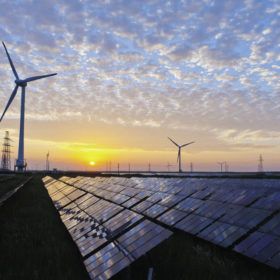
The weekend read: Tapping new markets
The energy transition does not only change electricity generation, but ideally also how we consume. Electricity markets in Europe, however, must deal with legacy regulations that fail to incentivize ideal consumption patterns to reduce curtailment and make the best possible use of the renewable energy assets we have. The result is towering bills for ancillary services, that could easily be avoided with a few regulatory tweaks and virtual power plants.
Statkraft virtual plant integrates renewables, storage and gas in UK
The virtual facility is monitoring approximately 1 GW of combined wind, solar, storage and flexible gas engines in the U.K. and its capacity may double in the summer. The energy managed by the plant is being sold on the British energy market.
