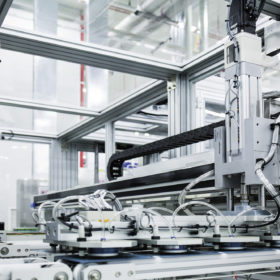
South Korea’s roadmap to drive down solar costs
The government has unveiled a plan to help the PV industry reduce the cost of solar panels from around $0.23/W to $0.10/W by 2030. The plan also aims to reach module efficiencies of around 24% – up to 35% for multi-junction cells – by the end of the next decade.

Is the EU solarizing its digitized economy sans an environmental tax policy?
The EU is solarizing its digital economy at a fast pace. The factors behind this paradigm shift in energy – when renewable energy is projected comprise 90% of the electricity mix in Europe by 2040 – include technical, economic, environmental.

Digging into perovskite efficiency
A research group at the Helmholtz Zentrum Berlin has conducted an in depth analysis looking at the crystalline structure of methylammonium lead iodide, one of the most promising perovskite materials for solar cell production. The group made a series of discoveries which they hope will help to unlock some of the remaining issues in creating cells that are both stable and highly efficient.

Mounting interest in gravity-based storage solutions
Austrian researchers have proposed gravitational energy storage for locations with low demand. The scientists claim the system they are suggesting can be combined with other forms of storage as well as renewables, costs $50-100 per megawatt-hour of stored energy and $1-2 million per megawatt of installed capacity to develop.

Exeger and ABB to build ‘light harvesting material’ fab in Sweden
Swedish company Exeger says the dye-sensitized ‘light-harvesting material’ it will produce at its facility will generate enough power to prevent the need to recharge portable electronic devices, lengthening battery lifespan perhaps indefinitely.

Brazil’s Copel contracts another 121.6 MW
The energy provider concluded its second renewables auction on November 13, and has contracted 121.6 MW of wind and solar. Selected projects will be granted a 15-year PPA and will have to begin commercial operations in 2023.

Chinese module makers land another two big overseas orders
GCL and Canadian Solar provide further proof of the solar boom that is gathering pace around the world even as attention focuses on the Chinese market.
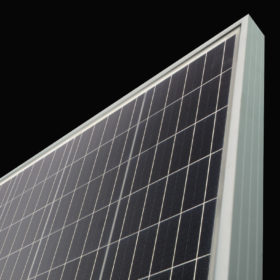
Chinese recovery will begin before year-end, according to Jinko
The Shanghai solar manufacturer has revealed another set of record-breaking quarterly figures and says it will shift 18-20 GW of modules in 2020, en route to generating revenues of $1.17-1.23 billion.
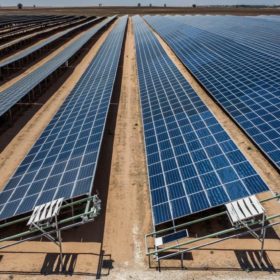
Israel’s largest solar park comes online
The clean energy arm of Israeli conglomerate Shikun & Binui will own the 120 MW plant near the village of Zeélim.

EDP: ‘PV will be one of the most dominant sources of power generation’
Portuguese electricity and gas company EDP used the 2019 Web Summit event as an opportunity to undermine the role of fossil fuels.
