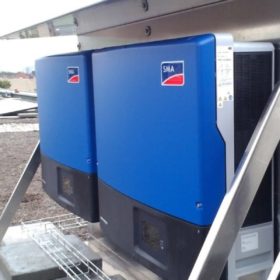
Study confirms rule of thumb that PV inverters should run without faults for around 15 years
A new study by Bern University of Applied Sciences shows that the performance of most PV inverters and power optimizers remains optimal for up to 15 years. The inverters considered came mainly from the manufacturers Fronius, Sputnik, and SMA and most of the power optimizers examined came from Solaredge.
DuPont Teijin Films: Recycled PV backsheets are technically viable
UP Initiative sponsor, DuPont Teijin Films is investigating closed loop recycling processes, specifically looking at how its backsheets can be recovered and used as a raw material for new production. Since 2020, it has been working on industrial trials with customers to offer rPET backsheets across its entire product range, and proof of principal trials to demonstrate the commercial feasibility of a true closed loop recycling process. pv magazine caught up with Steven Davies, EMEA market manager to discover what progress has been made in the last year.
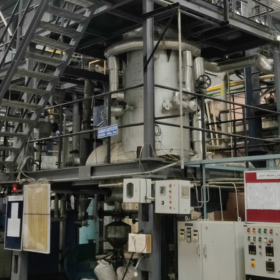
The Hydrogen Stream: Steam-based tech to produce 100 g of hydrogen from 1 kg of biomass
Researchers from the Indian Institute of Science (IISc) developed a two-phase hydrogen production technology that is capable of using steam to produce hydrogen from biomass. Furthermore, an Indian-Norwegian consortium is developing green ammonia in Oman, Toshiba is starting research on hydrogen production from geothermal energy, and Thyssengas is selecting personnel for the conversion of around 20% of its gas network.
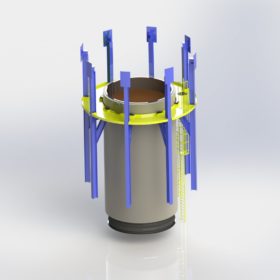
Hybridizing compressed air, thermal energy storage in post mining infrastructure
Scientists in Poland have developed a compressed air energy storage technology using a thermal energy storage (TES) system built into a disused mine shaft. The system works without external heat sources, and utilizes an air compressor, a compressed air reservoir with a built-in thermal energy storage system, and an air expander.

Viessmann builds heat pump factory in Poland
The Germany-based heating specialist wants to invest more than €200 million (US$200.5 million) in the new heat pump facility.
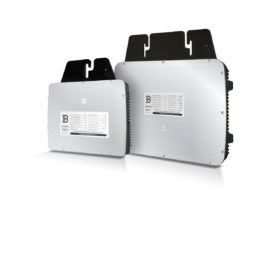
New micro-inverter series from China
Beny Electric unveiled a micro-inverter series with efficiency of up to 97.5% and a European efficiency of up to 97%. The micro-inverters are available in three different versions with a rated power output of 550 VA, 700 VA, and 2,800 VA, respectively.

Switzerland deployed 683 MW of solar last year
This year the Alpine country should see the deployment of up to 900 MW of new PV capacity. At the end of December, cumulative solar installations reached 3.65 GW.
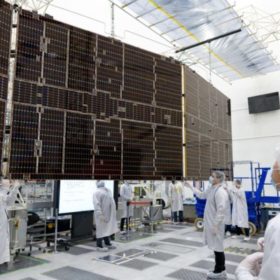
Solar panels power the largest optical telescope in space
Our deepest view into the universe is powered by PV. NASA was one of the earliest adopters of solar technology, and it continues to be an important feature of spacecraft today.

Tata Power to build 600 MW wind-solar hybrid plant in India
The plant will be located in the state of Karnataka and should be completed within 24 months.
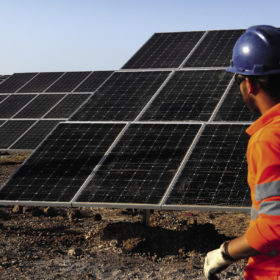
Clean power prices leap on back of tightening gas supply
Developers are making hay as far as PPA prices are concerned thanks to eye-watering wholesale electricity prices which mean they can just sell their solar and wind power on the open market.
