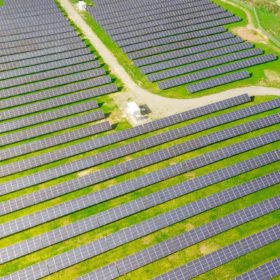
Global solar demand to reach 190 GW this year, says IEA
The International Energy Agency expects solar, wind power, and other renewable energy technologies to achieve triple-digit global growth this year, with new PV additions set to reach almost 200 GW.
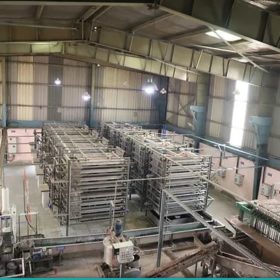
Emissions-free battery recycling facility will use electricity rather than smelting
ACE Green Recycling has announced plans to build a new plant in Texas to recycle both lead-acid and lithium-ion batteries.
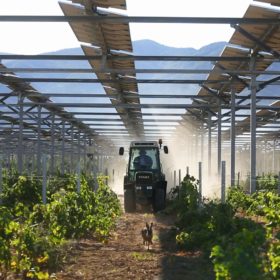
The weekend read: European PV subsidies a divisive topic
Subsidies for PV projects are a divisive topic in European countries. Mistakes of the past hang over fresh decision-making processes. Experts argue that changing market conditions are making even months-old schemes too generous, while missing the real issues.
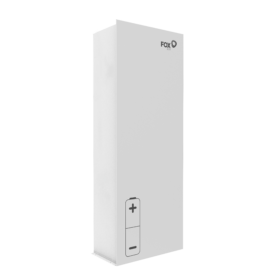
Smarter E Products: Fox exhibits all-in-one storage system
Intersolar 2022 has provided FoxESS the ideal opportunity to showcase its all-in-one storage system, the sleek and compact design of which allows for advanced performance, ease of installation and suitability to both indoor and outdoor settings.

Chinese PV Industry Brief: JA Solar major winner in solar panel tender with 3.1 GW in bids
Meanwhile, Trina Solar has established a new branch for upstream operations and Longi has a officially changed its company name.
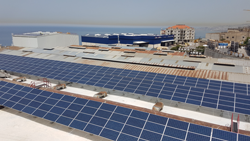
Lebanon issues 11 solar licenses for 165 MW
The Lebanese government has approved 11 licenses for 165 MW of PV capacity. The licenses are part of a 180 MW solar tender that the country initiated in January 2017.
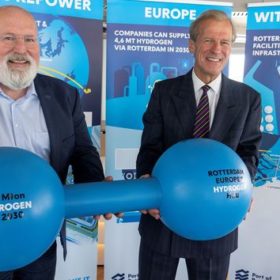
The Hydrogen Stream: Carbon-coated nickel anode to solve problems of hydrogen fuel cell without precious metals
A team of researchers from the University of Wisconsin-Madison, Cornell University, and Wuhan University have presented a completely precious metal–free alkaline fuel cell with enhanced performance using a carbon-coated nickel anode. Meanwhile, the Port of Rotterdam has offered to supply northwestern Europe with 4.6 million tonnes of hydrogen by 2030. According to RMI, Europe will import green hydrogen between 2024 and 2030. RenewableUK sees room for hydrogen exports from the UK to the EU.

DNV aims to achieve FPV-specific reference standards for floating solar PV
DNV is spearheading two joint industry projects that aim to develop reference standards for the design, development, and operation of floating PV systems. Such standards are still largely lacking, potentially leading to delays and obstacles in permitting and authorization.

JLNPhenix Energy expands lithium battery capacity to 550 MWh/year
With the addition of a 150 MWh-a-year plant in Maharashtra, JLNPhenix Energy has expanded its lithium battery manufacturing capacity in India to 550 MWh annually.
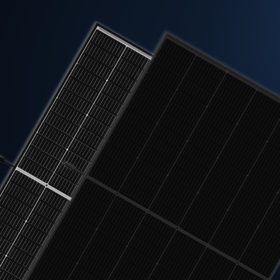
Smarter E Products: Trina Solar showcases G12 solar modules for rooftop applications
All the products rely on the company’s 210 rectangular silicon wafer (G12R) cell technology. The manufacturer claims these new products can increase the installed capacity of residential roofs by 5-7%. The largest panel is a 21.5%-efficient device with a power output of up to 580 W and the smallest features an efficiency of up to 21.3% and a nominal power of up to 425 W.
