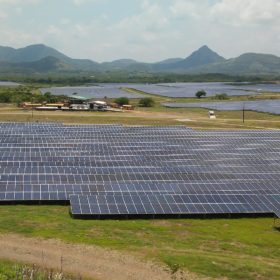
Reliance Industries to acquire majority stake in US solar startup
Reliance Industries is set to buy 79.4% of US-based SenseHawk, which provides software-as-a-service (SaaS) solutions for process optimization, automation, and asset information management across the solar asset lifecycle.

PV-driven rechargeable control module for ‘cyborg cockroaches’
Japanese researchers have built ultra-soft PV devices and ultra-thin electronics that can be placed on the curved abdomens of cockroaches without affecting their mobility. The system can be used to monitor hazardous areas, or for urban search-and-rescue operations.

India tenders 2.25 GW of round-the-clock power from renewable hybrids
Prospective developers in Solar Energy Corp. of India’s (SECI) latest tender will set up renewable energy projects to supply round-the-clock power. The projects can be located anywhere in India. Bidding closes on Oct. 10.
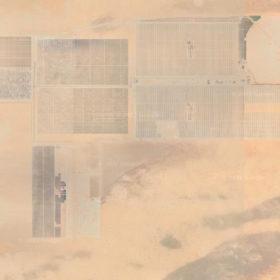
Sixth phase of Dubai solar park to add another 900 MW of capacity
The Dubai Electricity and Water Authority (DEWA) has lifted the lid on the planning process for the sixth phase of the Mohammed bin Rashid Al Maktoum Solar Park.

UK council has finance decisions removed after splurge on solar projects
The local authority in Thurrock, England, has had control of its financial decisions passed to neighboring Essex County Council after racking up debts of more than GBP 1 billion ($1.1 billion) over four years, including more than GBP 800 million invested in solar bonds.
Chinese PV Industry Brief: Maxwell secures 7.2 GW order for HJT solar lines
Maxwell Technology has secured orders for its heterojunction (HJT) solar cell production lines, while TBEA has agreed to sell 336,000 metric tons of polysilicon to JinkoSolar in the 2023-30 period.
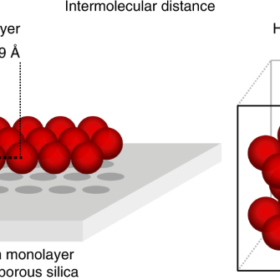
The Hydrogen Stream: Condensed hydrogen on smooth surfaces can sharply exceed liquid hydrogen density
A German-US research team has shown that hydrogen condenses on smooth surfaces at a very low temperature, forming a super-dense monolayer that reduces the volume to just 5 liters per kilogram of H2. Dutch researchers, meanwhile, have published a new study on hydrogen storage in porous rocks, and Itochu said it is moving forward with hydrogen plans in Japan and South Africa.
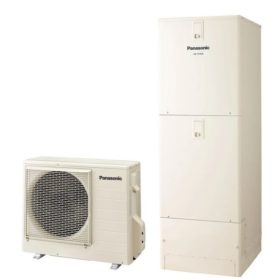
Panasonic to scale up heat pump output in Czechia
Panasonic has revealed plans to increase the annual production of heat pumps at its facility in Czechia to 500,000 units by March 2026.
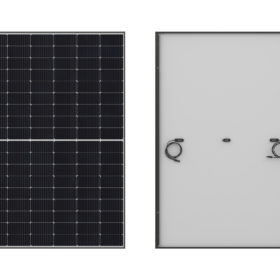
Sharp unveils black-framed 410 W half-cut solar panels
Sharp’s newest PV modules feature white backsheets and are made for the needs of design-oriented customers.
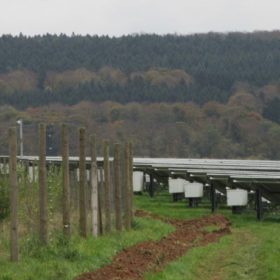
Solar tech theft rising in Germany amid supply bottlenecks
The Saxony State Criminal Police Office in Germany has blamed the energy crisis and growing solar demand for an increase in the theft of modules and inverters.
