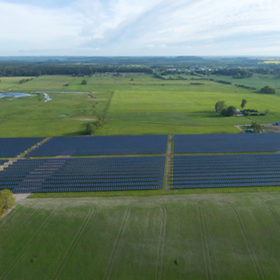
Danish developer set to build Sweden’s largest solar park
European Energy is ready to start building a 128.5 MW solar park in Sweden. The project was halted earlier this year, but that decision has since been reversed. The installation is expected to start generating electricity in 2024.
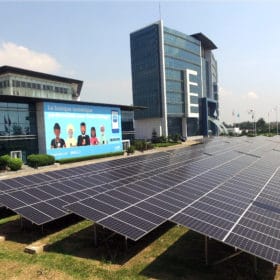
Tipping point for African C&I solar
With installers who cater to African businesses making the headlines this year, Jasper Graf von Hardenberg – whose C&I solar business was recently bought by Shell – explains here how the story of the continent’s commercial and industrial (C&I) solar segment was far from an overnight success.

Spain, Portugal to lead renewables in Europe, says Rystad
Norwegian consulting firm Rystad Energy has described the Iberian Peninsula as “a new European energy powerhouse.” It expects Spain and Portugal to reach 79% renewables in their combined electricity mix by 2030.

‘Smart islands’ in Greece
Amazon Web Services has inaugurated a pilot project to turn the Greek island of Naxos into a “smart island.” A number of other companies, including Volkswagen, are also running smart island pilots in the Aegean Sea.
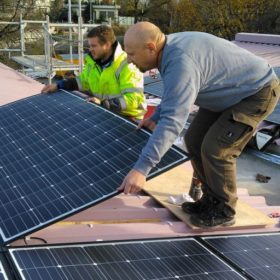
Germany installed 750 MW of solar in September
Germany’s Federal Network Agency (Bundesnetzagentur) says that 691 MW of new PV systems were subsidized under the country’s EEG renewables incentive program in September.
Veritas Capital acquires Wood Mackenzie
With the acquisition of analyst firm, Wood Mackenzie, Veritas expands the datasets it can provide to upstream producers and data asset managers on the global transition to clean energy.

Thailand introduces FIT scheme for solar, storage
In an unexpected move, the government of Thailand has introduced a feed-in-tariff (FIT) of THB 2,1679 ($0.057)/kWh over 25 years for solar and a 25-year FIT of THB 2,8331/kWh for solar plus storage.

The mobility rEVolution: PG&E obtains first V2G export rate for commercial EVs in US
PG&E has secured approval to set up a vehicle-to-grid (V2G) export compensation mechanism for commercial EV charging customers in California. Sono Motors is debuting its Sion solar electric vehicles in the US market, while Toyota and Jera are installing innovative second-life battery systems in Japan.
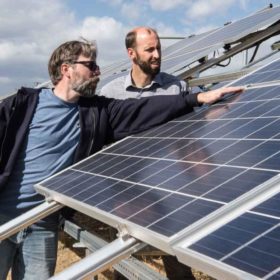
PV modules with longer lifetimes could slash demand for materials, says NREL
The US National Renewable Energy Laboratory (NREL) says in a new report that PV module lifetime extensions should be prioritized over closed-loop recycling to reduce demand for new materials.
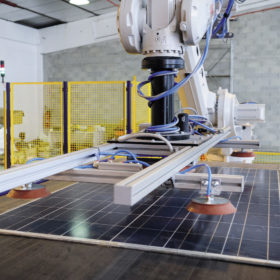
Recycling key to solar sustainability
A new study of the environmental impacts of renewable energy finds significant opportunities for solar to reduce its impacts in various categories, including human health, resource depletion, and environmental damage. The study notes in particular that more work is needed to establish a comprehensive reuse and recycling network for end-of-life PV products.
