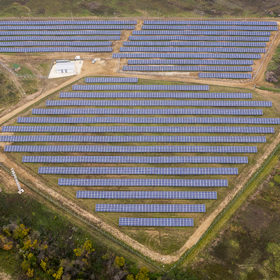
Serbia launches first renewables auction with 50 MW of solar
The Serbian authorities have launched the nation’s first renewable energy auction, with 50 MW of PV and 400 MW of wind power. The projects will be supported through contracts for difference for 15 years.
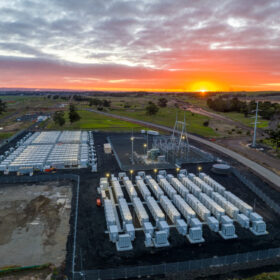
Australia commissions first big battery at former coal site
Engie, Eku Energy, and Fluence have commissioned the Hazelwood big battery, Australia’s first large-scale battery project, at the former coal site of a power station in the state of Victoria. The 150 MW battery claims several Australian firsts in its design and operation.

Longi claims 33.5% efficiency for perovskite/silicon tandem solar cell
The European Solar Test Installation (ESTI) has confirmed the results of Longi’s new perovskite/silicon tandem solar cell. It is currently the second-highest efficiency record in the world for a perovskite/silicon tandem cell.
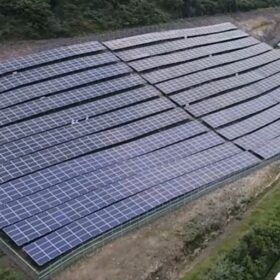
CubicPV secures $103 million of support for US wafer manufacturing
CubicPV says it plans to establish 10 GW of conventional mono wafer manufacturing capacity in the United States, driven by incentives in the US Inflation Reduction Act. The wafers could fill a void in the domestic supply chain and create 1,500 new direct jobs.
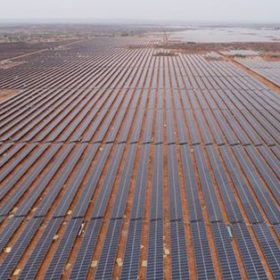
EY lists India as world’s most attractive solar market
India has retained its crown as the most promising market for solar investment, according to the latest edition of Ernst & Young’s Renewable Energy Country Attractiveness Index (RECAI).

Intersolar 2023 Day 2: QN Solar shows China is still top dog for PV
Our pv magazine reporters are out again pounding the show floor today on day 2 of the Intersolar Europe event in Munich. If you spot us, tell us your news and if not, drop by our booth to say hello. We’re at number 250 in Hall A2.
US green hydrogen market set to surge to $1.4 trillion by 2050, says Deloitte
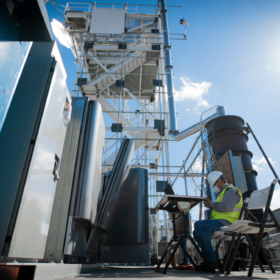
By 2050, the practice of using renewable energy to electrolyze water and create hydrogen fuel could become a global market of well over $1 trillion, according to a new report by Deloitte.
SolarEdge to integrate Vaillant, Samsung heat pumps with residential PV
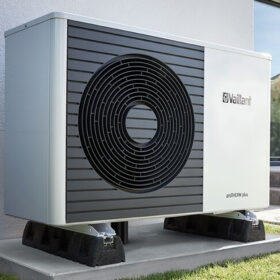
SolarEdge is partnering with Vaillant and Samsung to integrate their heat pumps into its home ecosystem. Homeowners will be able to optimize their energy consumption by using excess PV or shifting consumption in accordance with optimal energy rates.

First Solar showcases pre-commercial bifacial thin-film PV modules
First Solar has announced a limited production run of the “world’s first” bifacial solar panel with a cadmium telluride (CdTe) semiconductor. The pre-commercial Series 6 Plus Bifacial module is making its debut this week at Intersolar Europe in Munich, Germany.
Floating solar tech for harsh offshore conditions
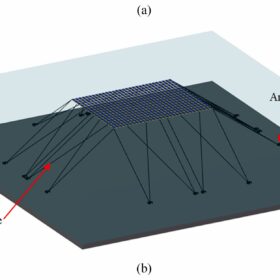
An international research team has designed a floating PV system that can reportedly withstand wave heights above 10 meters. The system uses splitters to link one mooring tether to multiple floating modules. This reportedly ensures sufficient structural capacity, while avoiding the need for too many mooring lines.
