Banking on batteries in Chile
The Chilean solar market is booming but as curtailment grows, a hybrid approach to generation is gaining ground. Storage project announcements are coming thick and fast as co-location with wind turbines offers cost efficiency and a smoother generation profile. Meanwhile, new capacity mechanism rules could take Chile one step closer to runaway battery growth.

Ontario plans large-scale, competitive energy procurement
The government of the Canadian province of Ontario has directed the Independent Electricity System Operator (IESO) to finalize a design framework for a large-scale energy procurement exercise, which will include solar. It says that ground-mounted solar installations will be prohibited in prime agricultural areas.
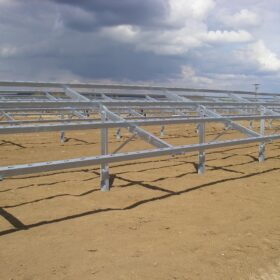
Greek PV group urges halt to large-scale solar licenses amid curtailment
The Hellenic Association of Photovoltaic Energy Producers (Spef) is pushing the Greek government to stop issuing new grid connection licenses for renewable energy systems to address the nation’s escalating power curtailment issue.
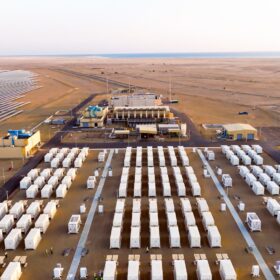
Huawei unveils world’s largest microgrid
China’s Huawei has built a 400 MW/1.3 GWh solar-plus-storage off-grid facility in Red Sea New City, Saudi Arabia.

Meyer Burger CEO resigns
Meyer Burger CEO Gunter Erfurt has resigned, with Franz Richter named as his successor. CFO Markus Nikles is also stepping down as part of the company’s restructuring, which includes job cuts, particularly in Europe.

Malaysia reaches 350 MW residential solar quota for net metering
Malaysia’s Sustainable Energy Development Authority reports that the 350 MW capacity allocated for residential solar under the net metering initiative has been reached. However, capacity remains available for government buildings, as well as commercial and industrial users under the same scheme.

Bahrain’s Khalifa Bin Salman Port to host 11.4 MW solar plant
India’s Bhageria Industries plans to build a utility-scale PV facility at the Khalifa Bin Salman Port of northeastern Bahrain. The project marks Bhageria’s first international solar venture.
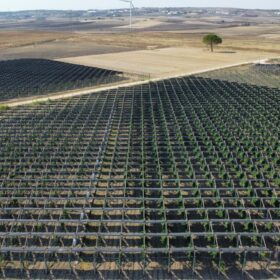
Agrivoltaics postpone harvest, improve wine quality
Italian winemaker Svolta Srl has deployed an agrivoltaic facility at its vineyard in Apulia, Italy. The PV array allowed the cultivation of vines that are normally not viable at this latitude.

Germany’s new solar installations hit 790 MW in August
Germany’s new solar installations surged to 790 MW in August, contributing to 10.23 GW of newly installed PV capacity for the first eight months of this year.
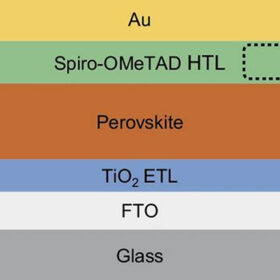
Perovskite solar cell based on lithium salt-doped spiro-OMeTAD achieves 25.45% efficiency
Researchers in China have proposed a new lithium-free doping strategy to fabricate spiro-OMeTAD-based hole transport layers (HTLs) for applications in perovskite solar cell. A PV device built with a salt-doped HTL achieved a record-breaking efficiency of 25.45%.
