World’s largest pumped storage power plant fully operational in China

From ESS News
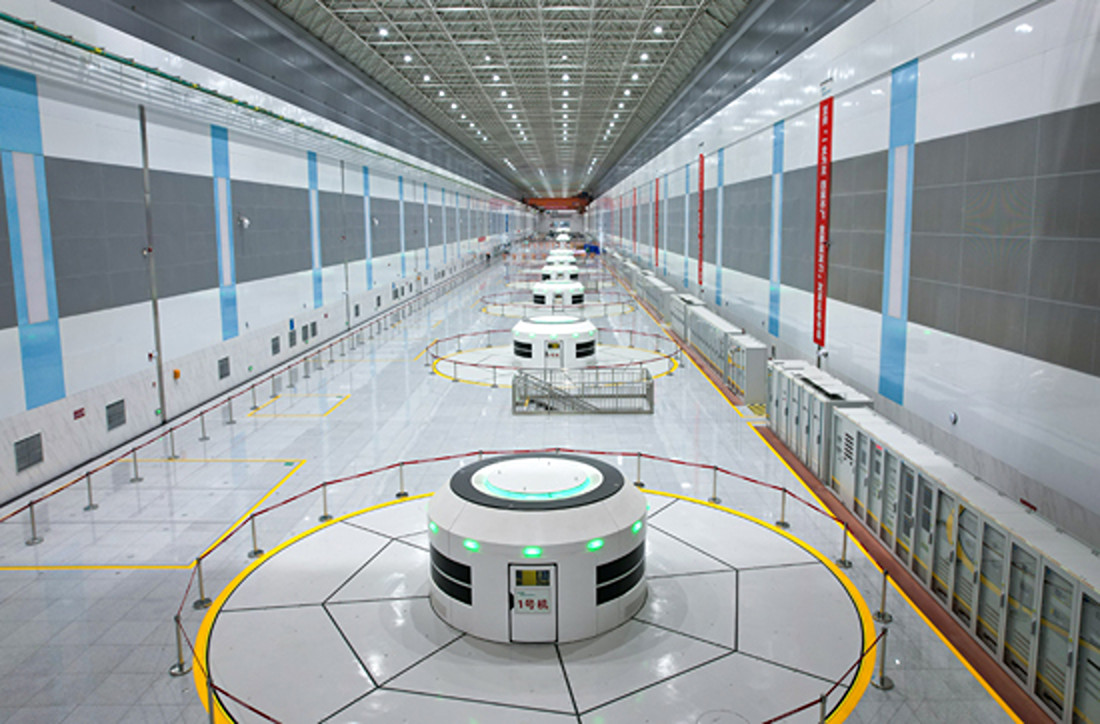
The Fengning Pumped Storage Power Station, the world’s largest facility of its kind, has commenced full operations with the commissioning of its final variable-speed unit on December 31. Located in Fengning County, Hebei Province, near Beijing and Tianjin, the plant is a key part of China’s renewable energy infrastructure, supporting a nearby 10 GW wind and solar base in Zhangjiakou, which is located nearby.
Developed by State Grid Xinyuan Group Co., Ltd., a subsidiary of the State Grid Corporation of China, the project represents a total investment of CNY 19.24 billion ($2.6 billion). Construction began in May 2013 and took more than 11 years to complete. The plant features 12 reversible pump-turbine units, each with a capacity of 300 MW, including two variable-speed units, bringing the total installed capacity to 3.6 GW. It is designed to generate 6.61 TWh annually while consuming 8.71 TWh of electricity for pumping, and it connects to the North China power grid via four 500 kV transmission lines.
To continue reading, please visit our ESS News website.
This content is protected by copyright and may not be reused. If you want to cooperate with us and would like to reuse some of our content, please contact: [email protected].

Please login to comment

The most remarkable an interesting thing about this plant is how much energy it can contain, and the writer who wrote this article failed to add that. For the record it is 40GWh
Calling 3.6 GW is not capacity as stated. It is power.
The whole system stores about one seventy fifth of the energy which will be held in the UK’s Portland underground hydrogen store. This will be constructed in a fraction of the time and cost and has almost no environmental impact at the surface. Indeed its construction will probably not be noticed by the locals.
It might be a good idea to put this scheme into some sort of perspective as well as finding someone who can distinguish between energy and power.
Perfect, that is exactly what the transmission needs. Right now only china, switzerland and austria are building significant hydro storage capacity. The worst is when germans only built pv akd wind without a possibility to store the energy.