




The biggest challenge in setting up a PV installation on a busy railway line was convincing everyone it was possible.
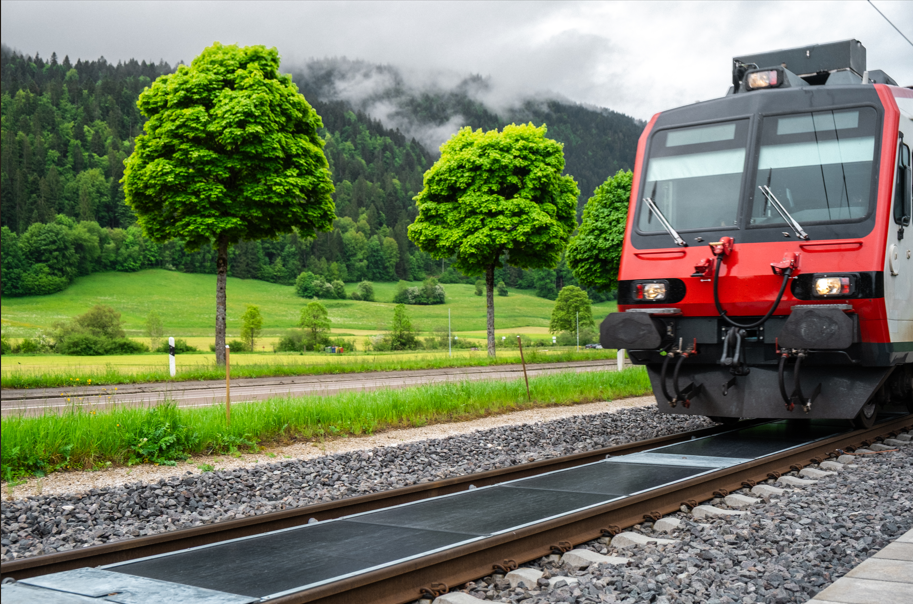
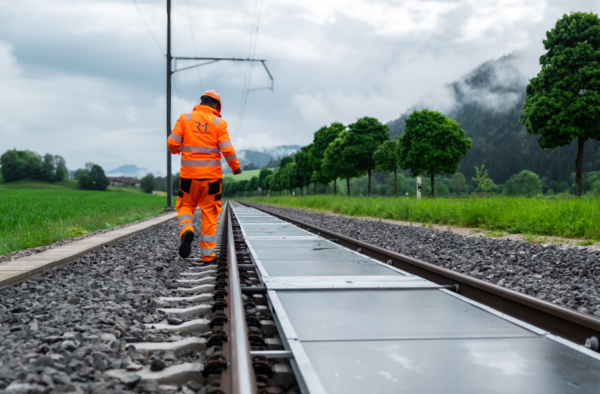
Running along train tracks near Buttes station in Switzerland’s Neuchatel region, the Buttes pilot features 48 solar full black panels with outputs of up to 380 W each. Its total estimated production is 16,000 kWh per year.
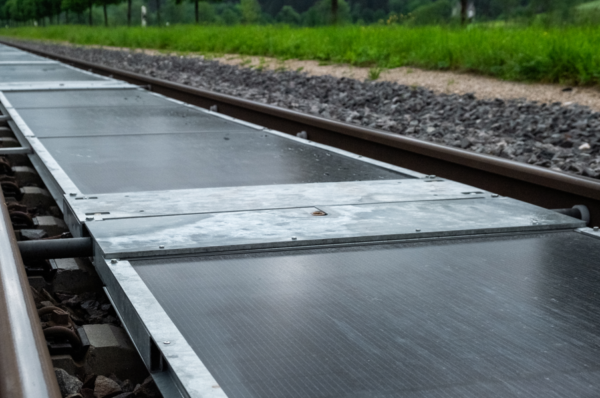
According to Joseph Scuderi, the concept of train-track solar is not new. What is new, he said, is this pilot’s panels can be removed by sliding them over, making maintenance work more affordable.
“This is very important because every three or four years you have big maintenance on the tracks and if you have PV panels installed with screws you cannot do that,” he said. “So, this removable system is very important for railway infrastructure.”
He claimed the pilot has been a “cost effective project, with a levelized cost of energy (LCOE) of between €0.06 and €0.08.” The total cost was €621,008 ($717,590), which Scuderi said was not so high and included the cost of all the research reports over a two-year period.
Although not an engineer, Scuderi has a marketing background and knows the PV market well. He developed the train tracks project to give “an answer to the market” and its lack of available land, a problem in Switzerland and in other regions also. Despite offering the answer, he said the project was slow to secure authorization.
“Doing photovoltaics on railway infrastructure is something very new for everybody,” Scuderi conceded, adding that it’s likely that similar pilots will need to be done in any countries wanting to emulate the Swiss project.
There is no shortage of international interest.
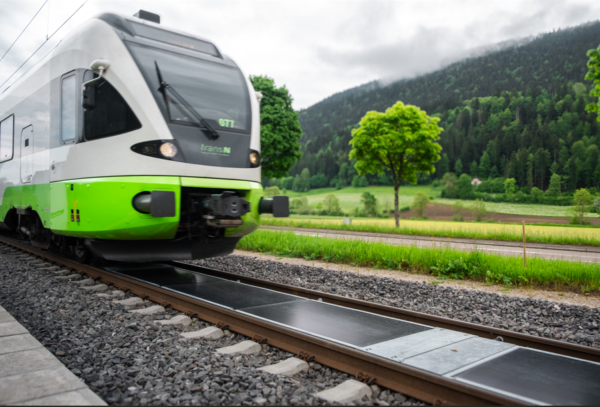
“Last week there was a company from the Indonesian railway sector that came to see the pilot project to convince themselves it was real and not a fake video,” said Scuderi. “All our prototypes have been validated up to 150 km per hour for the train to pass over it, and the trains on the pilot project pass at 90 km so we have some security margin.”
He said he has also seen interest from Japan and South Korea, where trains travel at more than 300 km/h. His team is now working to pass its current limit and then they can go to the market in these regions. Installation can be another challenge but Sun-Ways’ partner developed technology to build the Swiss pilot project, so it took just one day to install the entire 1 km pilot.
Now, Scuderi is looking ahead to his next “ferrovoltaics” project, a collaboration with a Swiss university to develop a railway smart grid that can be used by trains as well as by public and private entities.
The idea behind the smart grid project is to remove the need for inverters beside the railway tracks. It proposes a railway microgrid to enable linear PV installations and charging points for EVs and buses to be integrated into the railway network. A rail microgrid is like an extension of the railway electricity network and the integration is based on the use of a catenary (overhead wires system) as an energy distribution system.
“This is something very new,” said Scuderi. “We are at the beginning of a new story for railway and solar power plants.”
Editor's note: The original version of this story said that the prototypes have been validated up to 250 km/h, rather than 150 km/h. We apologize for the error.
This content is protected by copyright and may not be reused. If you want to cooperate with us and would like to reuse some of our content, please contact: editors@pv-magazine.com.


By submitting this form you agree to pv magazine using your data for the purposes of publishing your comment.
Your personal data will only be disclosed or otherwise transmitted to third parties for the purposes of spam filtering or if this is necessary for technical maintenance of the website. Any other transfer to third parties will not take place unless this is justified on the basis of applicable data protection regulations or if pv magazine is legally obliged to do so.
You may revoke this consent at any time with effect for the future, in which case your personal data will be deleted immediately. Otherwise, your data will be deleted if pv magazine has processed your request or the purpose of data storage is fulfilled.
Further information on data privacy can be found in our Data Protection Policy.