





Researchers at the University of South Australia and Deakin University in Victoria have found that households with solar panels gain more benefits from using peer-to-peer (P2P) energy sharing. Acting as “prosumers,” they can sell surplus power to neighbors, support grid stability and secure higher returns than current retailer feed-in tariffs.
The researchers said the role of prosumers is becoming more important as nearly 40% of Australian households, or 4.1 million homes, use rooftop solar. The influx of excess energy is overloading the grid and driving down feed-in tariffs, raising questions about the economic value of the technology.
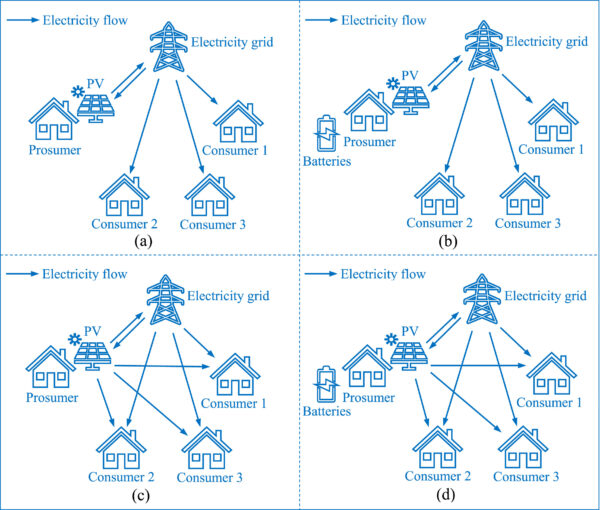
The study used real-world data from a 10 kW solar-powered home in Geelong, 75 km southwest of Melbourne. It simulated energy generation, consumption and sharing across four models over 12 months, including interactions with three neighboring consumers.
They published their results in “Technical and economic analyses of grid-connected residential PV considering batteries and peer-to-peer energy sharing.” The paper compares the different energy models to help householders and energy policymakers design more efficient, community-based solar systems.
The models include:
- Peer-to-grid (P2G) – exporting excess energy to the grid
- P2G with batteries – storing surplus energy before selling to the grid
- Peer-to-peer (P2P) – sharing surplus energy with nearby householders at an agreed price
- P2P with batteries – storing energy for self-use, then sharing remaining surplus with neighbours
Researcher Dr. Kevin Wang said modeling showed that under current conditions, P2P energy sharing cut neighbors’ grid electricity use by more than 30%. He said pairing it with a 10 kWh battery delivered the highest return for solar owners over 20 years, at AUD 4,929 ($3,166).
“P2P energy sharing delivers significant benefits compared to traditional grid export arrangements, particularly when feed-in tariffs are low,” Wang said.
To continue reading, please visit our pv magazine Australia website.
This content is protected by copyright and may not be reused. If you want to cooperate with us and would like to reuse some of our content, please contact: editors@pv-magazine.com.


By submitting this form you agree to pv magazine using your data for the purposes of publishing your comment.
Your personal data will only be disclosed or otherwise transmitted to third parties for the purposes of spam filtering or if this is necessary for technical maintenance of the website. Any other transfer to third parties will not take place unless this is justified on the basis of applicable data protection regulations or if pv magazine is legally obliged to do so.
You may revoke this consent at any time with effect for the future, in which case your personal data will be deleted immediately. Otherwise, your data will be deleted if pv magazine has processed your request or the purpose of data storage is fulfilled.
Further information on data privacy can be found in our Data Protection Policy.