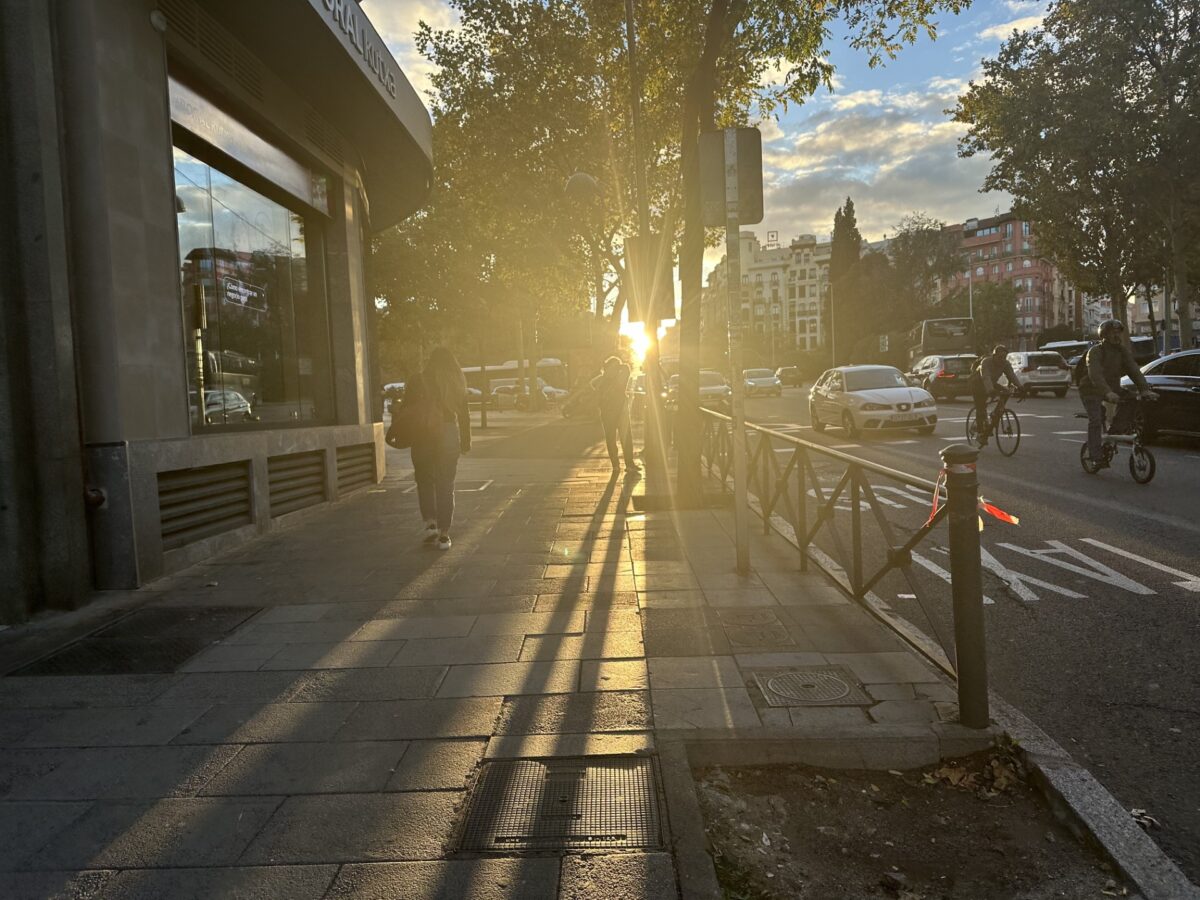





Researchers at Montreal’s Concordia University have explored the viability of a solar-powered green transportation system within the context of a 15-minute city.
The research paper “Adapting the 15-Minute City to North America: A Framework for Neighborhood Clusters with Urban Agriculture and Green Mobility,” available in the journal MDPI, presents a model combining the concept of a 15-minute city with urban agriculture and a solar-powered transportation system as a way of enhancing urban food security and reducing greenhouse gas emissions.
A 15-minute city is an urban-planning concept in which most daily necessities such as work, shopping, and recreation are accessible within a 15-minute walk, bike ride, or public-transit trip from anywhere in the city.
Referred to as the Food Production and Transportation Framework, the model ensures essential amenities such as grocery stores are easily accessible, usually within one kilometre of a residence. Underused rooftops, facades and lot spaces are converted into vegetable gardens, with the harvested produce distributed by a fleet of electric vehicles that are powered by solar panels embedded in sidewalks.
“We want to see how we can integrate energy, mobility, land use and social functions to bring daily needs closer to residents so they can reduce the number of fossil-fuel-consuming trips,” said corresponding author Caroline Hachem-Vermette. “Our broader goal is to design interconnected neighbourhood clusters that share food, energy and amenities, creating a balanced, adaptive urban network.”
The researchers applied their model to the West 5 neighbourhood in the Canadian city of London, Ontario, located 11 km from the city centre. The neighbourhood, which has set a goal of creating an electric vehicle-friendly neighbourhood, has a land area of approximately 0.28 km2 and around 2,000 inhabitants.
The team developed a cluster within the neighbourhood that includes food supply amenities, urban agriculture and the solar-powered transportation system. The neighbourhood cluster has a radius of 1 kilometre, making it a 15-minute walk from the perimeter to center.
The team’s methodology accounted for rooftop, facade and lot areas for cultivation, walking distances between residences and local amenities, crop yields and per capita food demand. For the solar-powered transportation system, it was assumed the sidewalk photovoltaics had a rating of 100 W and an efficiency of 15%. The research paper details the dimensions of the sidewalk photovoltaics as 600 mm x 600 mm and uses irradiance data to calculate that the neighbourhood sees 286 sunny days annually.
According to findings outlined in the paper, utilizing 13.8% of a roof area, 10% of facades and 15% of lot space within the neighbourhood cluster for urban agriculture could make the neighbourhood completely self-sufficient.
The solar-powered transportation system could operate with a single unit powered by 98 sqm of sidewalk photovoltaics, reducing CO2 emissions by 98% from the base case. An economic analysis of the solar-powered transportation system calculated a payback period of 2.8 years to cover initial investment, with the cost of solar-generated electricity estimated at CAD 0.92 ($0.66)/kWh.
In the research paper’s conclusion, the team wrote that their framework offers planners, policymakers and communities a scalable tool for integrating food and mobility strategies. “Beyond reducing environmental impacts, the framework aligns with multiple sustainable development goals, including enhancing food security through urban agriculture, advancing sustainable energy supply and fostering inclusive, resilient, and sustainable neighbourhoods,” the team said.
This content is protected by copyright and may not be reused. If you want to cooperate with us and would like to reuse some of our content, please contact: editors@pv-magazine.com.


66¢ per kilowatt-hour? Wow!
Across the river in Detroit, residential customers only pay 19¢/kWh
The highest residential rate for power in London ON is 39.1¢/kWh (for “on peak” hours)