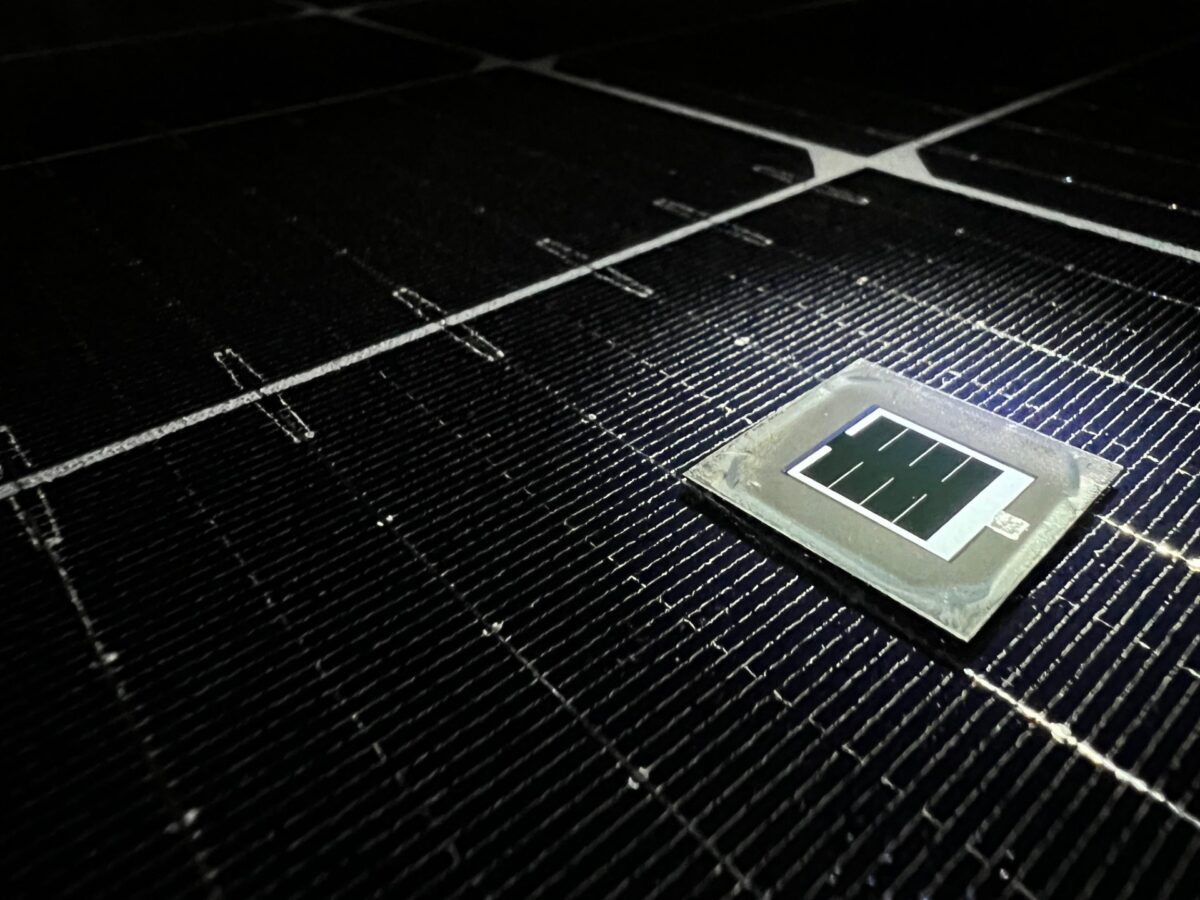





South Korea‘s Minister of Economy and Finance, Koo Yun-cheol, announced this week a KRW 33.6 billion plan to help the domestic PV industry develop commercial perovskite-silicon tandem solar products by 2030.
The plan is part of a broader scheme aimed at developing new high-voltage direct current (HVDC) technologies, as well as small nuclear reactors (SMRs), among other things.
“The commercialization of next-generation solar modules will focus on restructuring the solar cell industry ecosystem by securing core technologies for ultra-high-efficiency tandem solar cells,” the minister said in a statement. “Establishing domestic and international standards and certification systems will also be implemented to create an initial market. Through these efforts, the goal is to achieve world-first commercialization and world-leading efficiency levels of 35% for tandem cells and 28% for modules within the next five years.”
The government said the funding will be initially devoted to unspecified research and development activities, without providing further details.
South Korea-based solar module manufacturer Hanwha Q Cells announced a KRW 1.5 trillion investment in 2021 to expand solar module manufacturing capacity and increase research and development in perovskite-silicon tandem technologies.
In November 2022, Qcells and a group of European research institutes led by HZB started a project with the aim of producing high-efficiency tandem solar cells and modules. In December 2023, Qcells announced a significant breakthrough in perovskite-silicon tandem solar technology, with a solar cell achieving 28.6% efficiency, signaling that the technology is ready for mass production.
In September, South Korea-based Flexell Space, a spinoff of Hanwha Systems, a defense and space solutions unit of South Korea’s Hanwha Group, announced it is developing perovskite-copper indium gallium selenide (CIGS) tandem solar technology for satellites and other aerospace applications.
This content is protected by copyright and may not be reused. If you want to cooperate with us and would like to reuse some of our content, please contact: editors@pv-magazine.com.



By submitting this form you agree to pv magazine using your data for the purposes of publishing your comment.
Your personal data will only be disclosed or otherwise transmitted to third parties for the purposes of spam filtering or if this is necessary for technical maintenance of the website. Any other transfer to third parties will not take place unless this is justified on the basis of applicable data protection regulations or if pv magazine is legally obliged to do so.
You may revoke this consent at any time with effect for the future, in which case your personal data will be deleted immediately. Otherwise, your data will be deleted if pv magazine has processed your request or the purpose of data storage is fulfilled.
Further information on data privacy can be found in our Data Protection Policy.