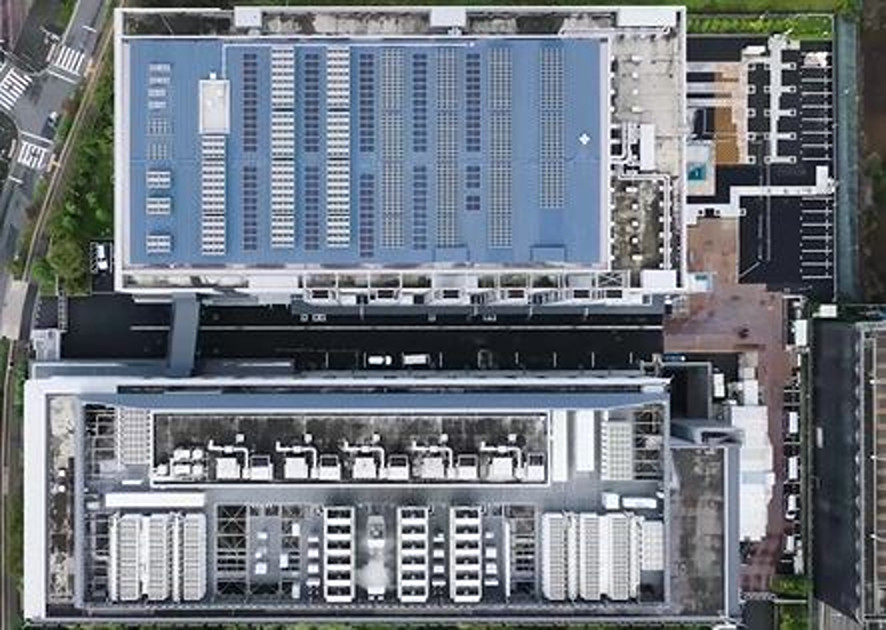





Japan-based optical imaging and printing technology company Canon announced that its Canon IT Solutions Inc. unit has begun testing an industrial photovoltaic system designed to power its data center in Nishitokyo, located in the western part of Tokyo Metropolis, Japan.
“Since April 2024, Canon ITS has been procuring renewable energy from external sources, and this demonstration experiment aims to further strengthen its renewable energy utilization efforts,” Canon said in a statement.
The data center is described as a Tier 4 high-performance facility, the highest level of reliability under the Uptime Institute’s classification system. This designation indicates that the data center is designed to be fault-tolerant. It currently serves unspecified companies in the financial, manufacturing, and cloud computing sectors.
Canon explained that the PV system can generate approximately 69 MWh of electricity annually. It is also intended to diversify power supplies in the event of a disaster or emergency, though no further technical details were provided.
“Going forward, we are considering the introduction of storage batteries and other renewable energy technologies, as well as new power procurement methods such as off-site PPAs,” Canon ITS added. “By generating a portion of our electricity through in-house renewable energy, we will evaluate ways to reduce both environmental impact and electricity costs.”
This content is protected by copyright and may not be reused. If you want to cooperate with us and would like to reuse some of our content, please contact: editors@pv-magazine.com.


By submitting this form you agree to pv magazine using your data for the purposes of publishing your comment.
Your personal data will only be disclosed or otherwise transmitted to third parties for the purposes of spam filtering or if this is necessary for technical maintenance of the website. Any other transfer to third parties will not take place unless this is justified on the basis of applicable data protection regulations or if pv magazine is legally obliged to do so.
You may revoke this consent at any time with effect for the future, in which case your personal data will be deleted immediately. Otherwise, your data will be deleted if pv magazine has processed your request or the purpose of data storage is fulfilled.
Further information on data privacy can be found in our Data Protection Policy.