Germany’s Texxecure launches standardized quality rating for PV systems

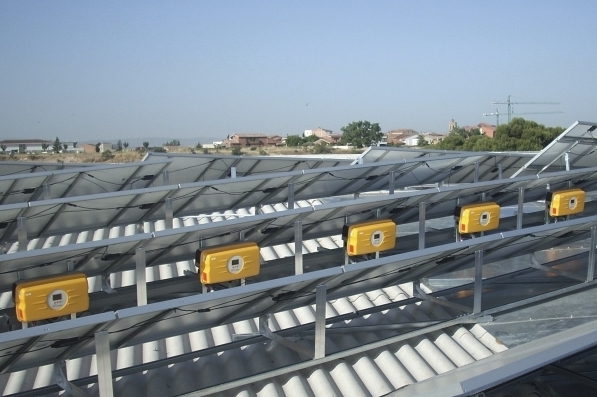
The Texxecure Rating Foundation has introduced a standardized quality rating for PV systems. The system assesses individual components and complete projects against consistent criteria, producing a compact risk score from AAA to D. It is designed for project developers, asset owners, banks, investors, and insurance companies.
The rating allows users to judge whether a ground-mounted solar project is a sound investment and whether there are technical failure risks. Ideally, the evaluation process begins during the planning stage. The two-step assessment includes a document review followed by a physical on-site inspection, both of which feed into the overall rating. Systems scoring AAA through B receive a certificate and a detailed inspection report, with results stored in a database; clients decide who can access the rating.
A key feature is the component Type-Rating, mainly for modules and inverters. Rated components feed into the project-level evaluation via an algorithm. Existing installations can also be rated for resale, refinancing, or insurance purposes.
The system originated in the context of performance guarantee insurance, developed with insurer HDI-Gerling and reinsured by Munich Re. Individual banks have already supported the initiative. It is mentioned in the International Energy Agency’s Task-12 report of August 2025.
Texxecure said its system is an alternative or complement to traditional technical due diligence. Its main advantage is delivering a complete, transparent, and standardized technical evaluation covering ISO/IEC standards, quality management principles like ISO 9000 and EFQM, and ESG criteria.
Certified engineering firms, known as rating bodies, conduct the inspections and issue certificates under Texxecure’s Rules of Procedure and Standard Operating Procedures. ISO/IEC-17000-accredited institutions follow a simplified admission process, while others undergo a prior audit.
Initial projects were implemented with TÜV Rheinland. Additional qualified engineering organizations may apply to become rating bodies. The system is international, with ongoing development overseen by an advisory board and stakeholder groups. New technologies are integrated systematically through this process.
This content is protected by copyright and may not be reused. If you want to cooperate with us and would like to reuse some of our content, please contact: [email protected].

Please login to comment