




From ESS News
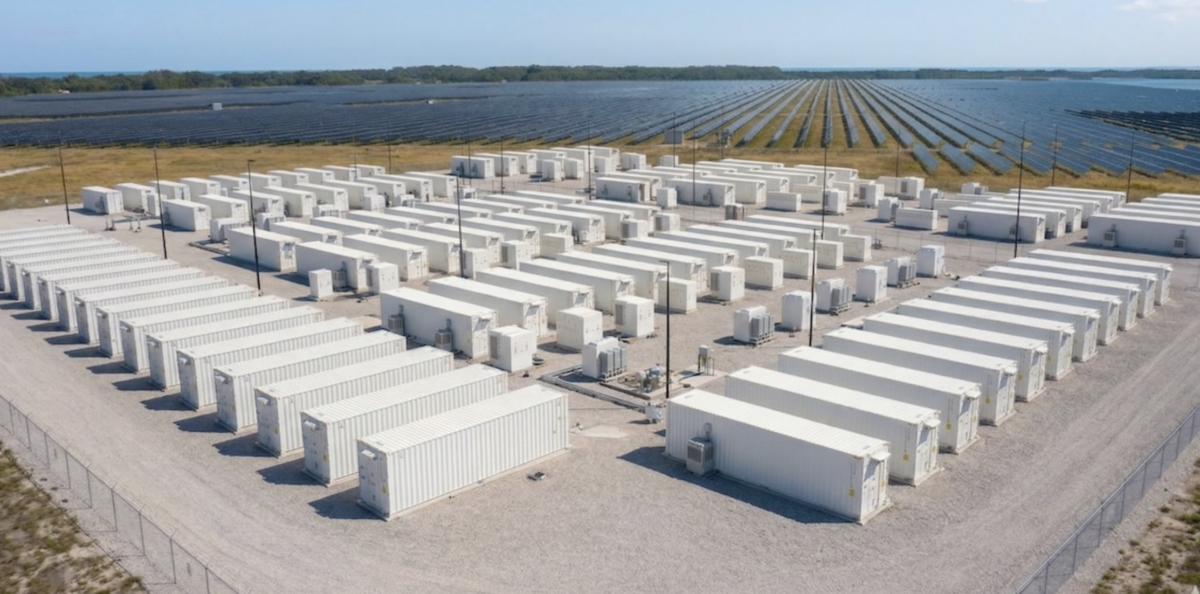
A 350 MWh battery storage facility somewhere in Europe saw revenues fall short of expectations. Subsequent analysis revealed that the situation could have been far worse.
Similar to series-connected PV modules, the weakest component in a battery storage system ultimately determines overall performance.
“Battery analysis showed that in this system, the most fully charged cell was at 100%, while the least charged cell was only at 75%,” says Lutz Morawietz, head of algorithm development at Volytica.
In a series configuration, a cell that has not yet reached full charge cannot be charged further once the most charged cell hits its limit. The same constraint applies during discharge: the least charged cell empties first, prompting the battery management system to terminate the process – leaving unused energy in the remaining cells.
To continue reading, please visit our ESS News website.
Register now and secure your spot.
 Learn more about utility-scale storage at the Battery Business & Development Forum, co-organized by pv magazine, on March 31 in Frankfurt.
Following the first successful and fully booked BBDF last July, the event will take place for the second time in Frankfurt on March 31 and April 1, 2026. On the first day, discussions will cover topics such as how to raise equity and debt capital, who assumes which risks, and how the grid connection situation is expected to develop. On the second day, the program will include the virtual BESS lab, a discussion on co-location business models, and on quality in storage planning and implementation. On the first day, before the networking dinner, start-ups including Invertix, re-twin, reLi, Module Energy, Re-Twin, and Scale Energy will present their pitches and be available for discussion.
You can find more information and the registration link here
This content is protected by copyright and may not be reused. If you want to cooperate with us and would like to reuse some of our content, please contact: editors@pv-magazine.com.

By submitting this form you agree to pv magazine using your data for the purposes of publishing your comment.
Your personal data will only be disclosed or otherwise transmitted to third parties for the purposes of spam filtering or if this is necessary for technical maintenance of the website. Any other transfer to third parties will not take place unless this is justified on the basis of applicable data protection regulations or if pv magazine is legally obliged to do so.
You may revoke this consent at any time with effect for the future, in which case your personal data will be deleted immediately. Otherwise, your data will be deleted if pv magazine has processed your request or the purpose of data storage is fulfilled.
Further information on data privacy can be found in our Data Protection Policy.