Rosi to build PV module recycling plant in Spain

From pv magazine Spain
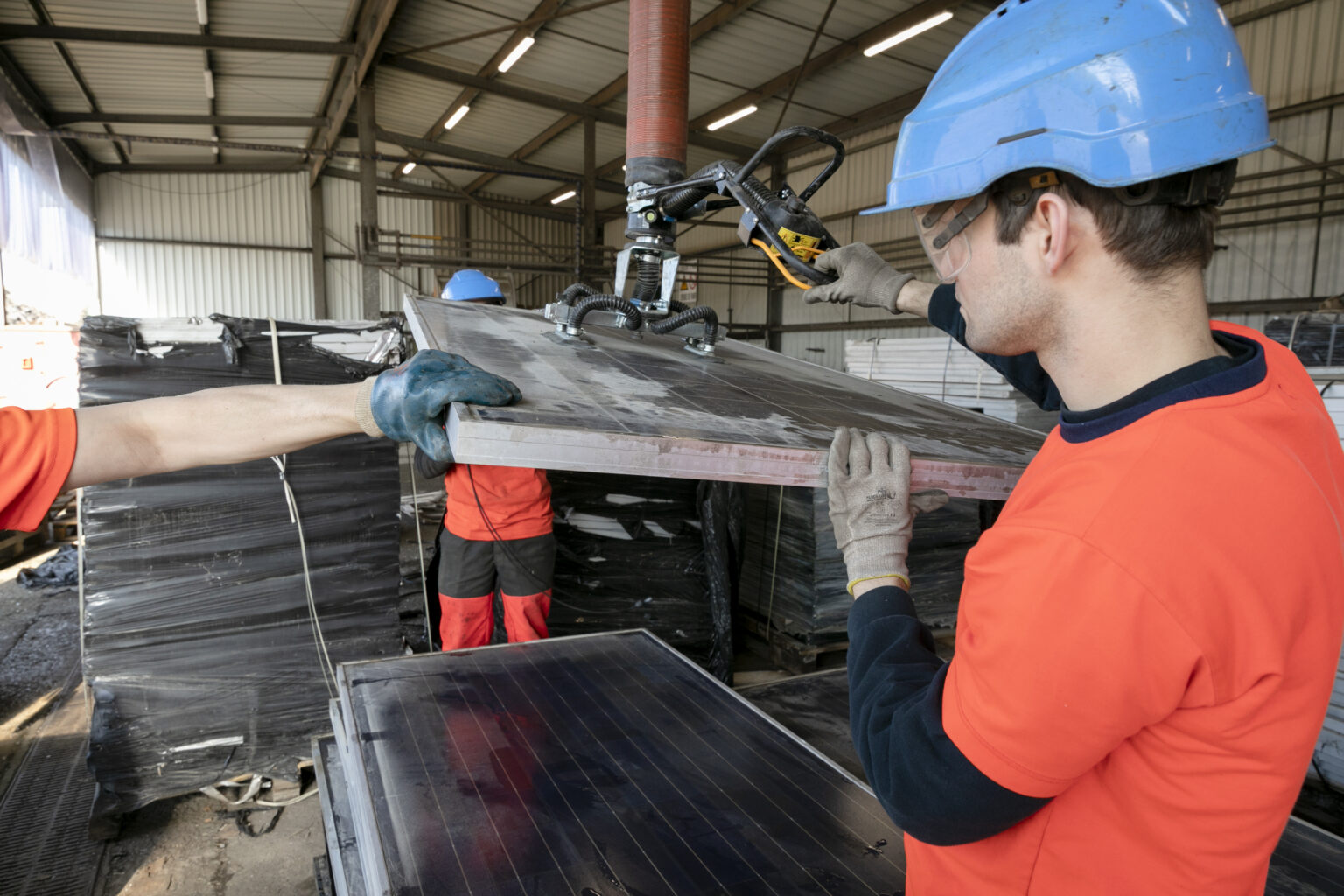
Rosi, a French cleantech company specializing in the recycling of end-of-life PV modules, has secured more than €20 million ($23.4 million) in funding to accelerate its next growth phase. The funding will support the commissioning of a new facility in Teruel, Spain, which will have a processing capacity of 10,000 tonnes per year.
The Series B round attracted new international investors alongside existing shareholders, including InnoEnergy, CMA CGM, the European Innovation Council (EIC) and Spanish company G3T. Finadvice, a Zurich-based corporate finance consultancy specializing in deeptech, acted as strategic financial advisor and also participated as an investor, together with family offices from Switzerland and Poland.
Through its Inspire-PV project, supported by the European Climate, Infrastructure and Environment Executive Agency (CINEA) under the European Innovation Fund, Rosi aims to accelerate the industrial deployment of its PV module recycling solutions. The company says it is leveraging experience gained at Rosi Alpes, its first industrial plant, to support the scale-up of the new Teruel facility.
“This new plant will represent a significant milestone in the industrialization of photovoltaic recycling, with an integrated and highly automated line designed for large-scale implementation,” the company said. The facility will produce high-purity secondary raw materials, including silver, silicon, copper, aluminium and glass.
According to Rosi, once preliminary studies are completed, the plant will enter the construction phase as soon as technical specifications are finalized and the necessary permits are obtained.
Rosi already operates Rosi Alpes in France and was among six industrial operators selected in a national tender led by Soren, France’s approved body for the collection and treatment of end-of-life PV modules, to expand recycling capacity. Alongside Rosi, Envie 2E, Galloo, RVE and First Solar were selected, with facilities distributed across mainland France and overseas territories. Collectively, the operators are expected to process more than 45,000 tonnes of PV modules per year.
Beyond France, Rosi also operates in the United Kingdom, Germany and Switzerland in collaboration with Sens eRecycling.
Rosi’s recycling technology is based on a pyrolysis process that separates the different materials present in PV modules. Pyrolysis is a thermal decomposition process carried out in the absence of oxygen, widely used in industry to break down organic materials and recover valuable constituents.
“Silver represents less than 0.1% of a solar module, but accounts for a significant share of its value,” said Yun Luo, co-founder and president of Rosi Solar. “The same applies, to a lesser extent, to silicon, copper and high-purity glass.”
The company has developed a low-intensity thermal and chemical treatment process enabling the recovery of high-value metals and materials, as well as a patented process for reintegrating silicon into industrial applications. With support from the French Environment and Energy Management Agency (Ademe) for proof-of-concept validation, Rosi has also focused on purifying silicon recovered from wafer-cutting waste.
In 2019, Rosi developed a second extraction project with Veolia, again at proof-of-concept stage and co-financed by Ademe to develop an industrial prototype. The company’s customers include potential users of recovered materials, particularly in the chemical industry.
This content is protected by copyright and may not be reused. If you want to cooperate with us and would like to reuse some of our content, please contact: [email protected].

Please login to comment