Germany, UK, Bulgaria: Europe’s top 3 co-location markets

From ESS News
Aurora Energy Research’s latest European Co-location Markets Attractiveness Report has singled out Germany as the most lucrative region for 2026, followed by the UK and Bulgaria.
The report assessed 20 regions in Europe based on their attractiveness to investors looking into co-located renewables. It placed Germany in the top spot due to the market’s size and strong IRR potential, relative to a standalone project.
The UK and Bulgaria both tie in second place, with the UK highlighted for its high installed capacity and a healthy project pipeline, while Bulgaria also has a strong pipeline and a decent subsidy system.
Other markets noted in the report for their potential include Spain, Hungary, and France.
Grid access and policy are huge factors in a market’s attractiveness for investors in co-location projects, the report showed. More than 1,600 GW of renewable and energy storage capacity is languishing in grid connection queues in Europe.
Aurora senior research analyst, Sameer Hussain, pointed out that co-locating renewable energy generation sources like wind, solar and batteries can provide an economically viable solution to grid problems.
“As renewable penetration accelerates, grid congestion, curtailment and price volatility are becoming defining features of Europe’s power markets. Co-location is no longer a niche solution: it is increasingly critical to protecting project economics and sustaining investment momentum,” said Hussain.
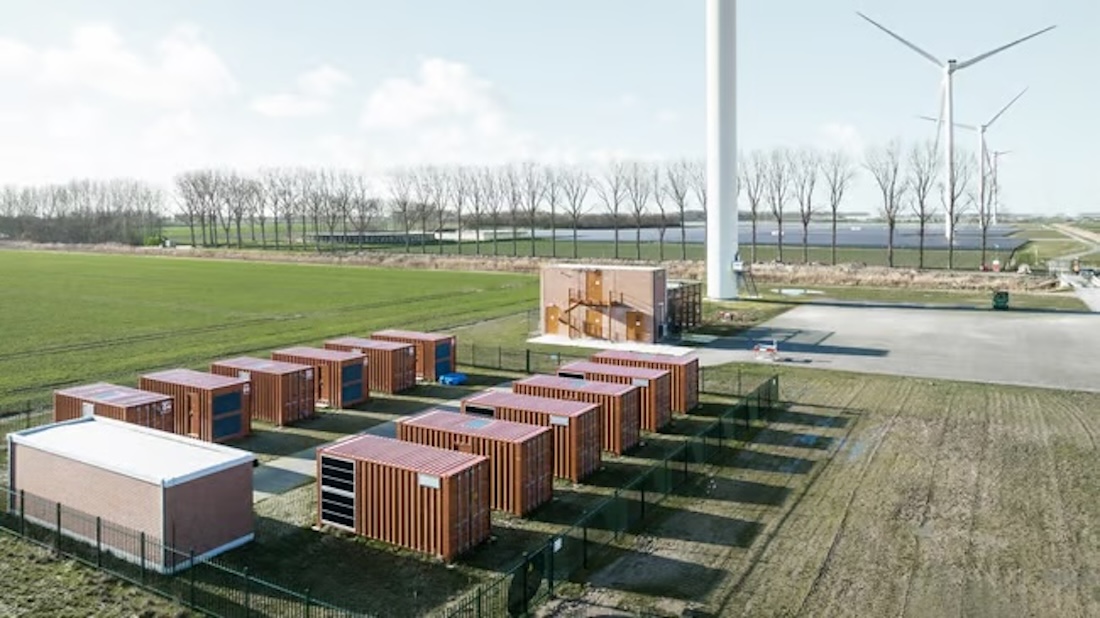
Already, solar-plus-storage co-located projects account for more than 60% of co-located facilities deployed across Europe. Aurora expects this to grow over the next few years, noting that high grid charges in some markets like the Netherlands make the case for pairing storage with wind and solar.
Despite the promise, markets vary quite a bit depending on policy and grid costs, which in turn affect economics.
“Co-location is not a one-size-fits-all investment across Europe,” said Aurora’s research lead for pan-European power markets, policies and technologies, Jörn Richstein. “In some markets it is driven by merchant upside, in others by subsidy-supported stability, and elsewhere by the need to overcome grid constraints and limit curtailment.”
Negative prices and curtailment in markets like Spain, Germany, and the Netherlands are a big concern for many renewable project owners, but co-location – and battery storage, in particular – is being touted as a way to get more value for their investment.
Co-located storage can help shift excess generation from non-synchronous generation sources like wind and solar to store in batteries and release to the grid on demand as needed, making renewable projects more valuable. Aurora’s report did note that battery revenues could fall by as much as 20% by 2040 due to market saturation so co-location is an attractive and secure investment for BESS developers also.
Hybrid power purchase agreements (PPAs) are also gaining a foothold in Europe, with Spain leading activity. More than 700 MW was contracted in 2025 in Europe’s hybrid PPA market, and Aurora researcher Rebecca McManus said the growth points to “rising confidence among both corporate offtakers and generators in co-located and hybrid asset structures.”
This content is protected by copyright and may not be reused. If you want to cooperate with us and would like to reuse some of our content, please contact: [email protected].

Please login to comment