Solar PPAs raise Spanish spot prices, not suppress them

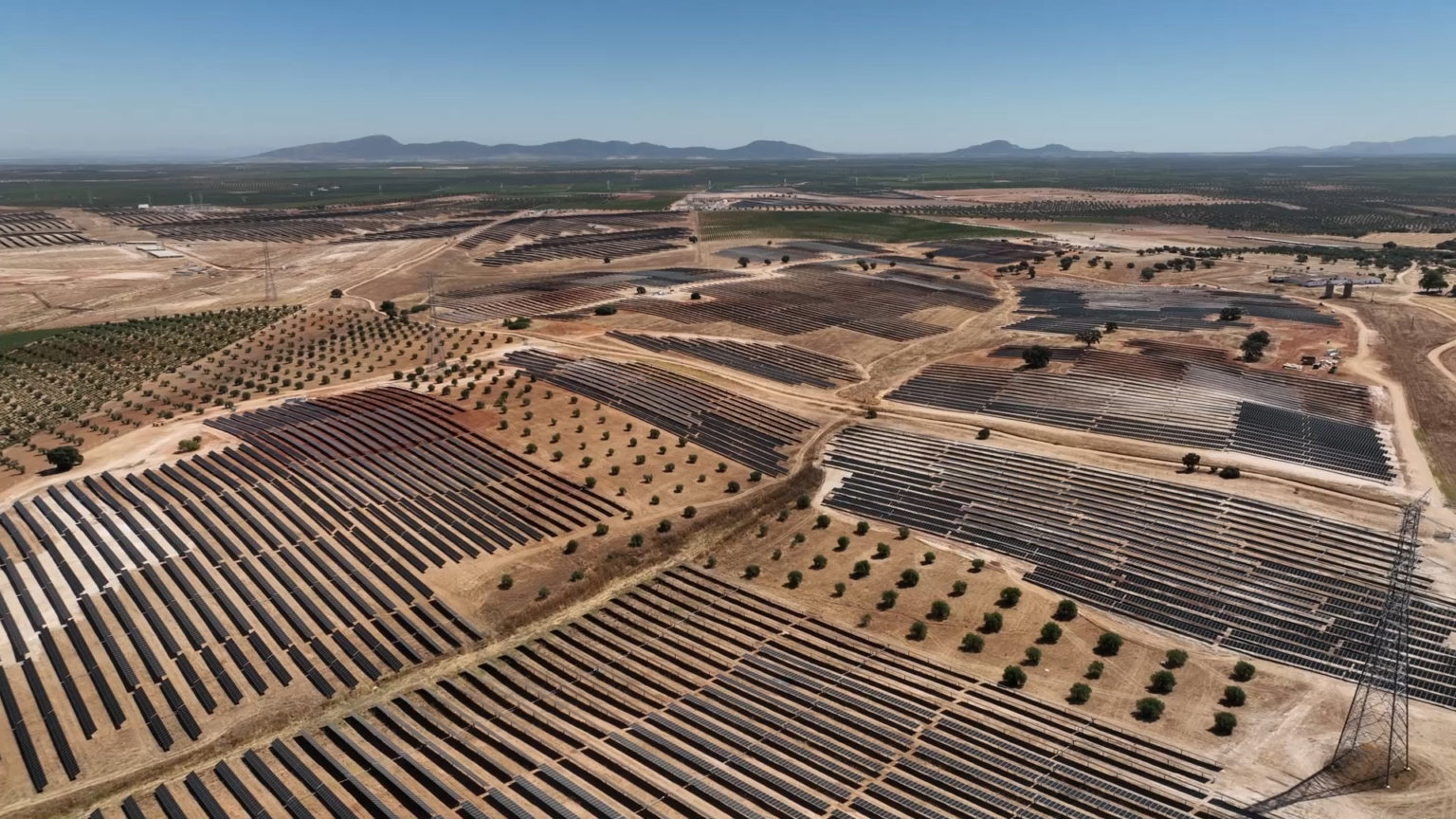
A new study published in Utilities Policy finds that physical renewable energy contracts can reverse the price-dampening effect of wind and solar in day-ahead markets during high-penetration periods.
The paper, “Long-term and spot electricity markets: The technology link in Spain,” by Daniel Davi-Arderius of e-Distribución Redes Digitales and Tooraj Jamasb of Copenhagen Business School, shows the effect is regime-dependent, with renewable contracts shifting to a positive impact on spot prices during the normalization phase.
The researchers analyzed 52,260 hourly observations from Spain’s day-ahead electricity market across 11 structural periods spanning January 2019 through December 2024, covering the pre-pandemic baseline, the pandemic demand shock, the post-Ukraine supply shock, the Iberian Exception gas price cap, and the subsequent normalization phase.
Davi-Arderius and Jamasb applied an AR(1,24) autoregressive moving average model with generalized autoregressive conditional heteroskedasticity (GARCH) and threshold ARCH extensions to separately model mean price effects and conditional variance across each period.
PBC are over-the-counter offtake agreements – including vertical intragroup contracts, independent retailer hedges, and physical power purchase agreements – under which nominated volumes are netted out of the day-ahead market before clearing. Every megawatt traded under a PBC is a megawatt of generation and demand removed from the daily pool. The researchers said that PBC settled between roughly 40% and 47% of Spain’s total electricity demand for most of the study period, with the share declining in 2024 following the expiry of the Iberian Exception mechanism that had created financial incentives to migrate demand into bilateral contracts.
They said that the effect of PBC on spot prices is technology-dependent and shifts with market conditions. During demand and supply shocks – the pandemic lockdowns and the post-Ukraine crisis, for example – aggregate PBC reduced spot prices.
The direction reversed during the Iberian Exception and persisted into the normalization phase: aggregate PBC increased spot prices by €0.672/MWh (about $0.78/MWh) per additional percentage point of demand settled under PBC in P8 and by €1.402/MWh in P9, the authors found, and the effect remained positive at €0.586/MWh in P10 and €0.596/MWh in P11 during normalization.
Technology split
Hydropower PBC consistently reduced day-ahead spot prices across all 11 periods, peaking at -4.631 €/MWh per percentage point during the Iberian Exception, the researchers said. They suggested that this reflects hydropower’s dispatchability: moving hydro into long-term contracts reduces the scope for strategic bidding behavior in the spot market.
PBC from wind and PV produced different results. Wind PBC increased spot prices in all periods except the pandemic lockdown, the authors found. Solar PBC reduced prices during the crisis phases of 2020 through 2022 but shifted to a positive price impact during the normalization phase, coinciding with rapid capacity expansion – contributing €1.676/MWh per percentage point in P10 and €0.292/MWh in P11, the researchers said. Solar’s installed capacity stood at 5 GW in P1 and had reached 39.7 GW by P11.
The researchers suggested several explanatory factors. As more renewable generation is committed under physical contracts, the day-ahead market loses the low-marginal-cost volume that would otherwise suppress clearing prices. The residual spot market, they suggest, then clears on more expensive dispatchable technologies: coal generation contributed €19.27/MWh and combined cycle €7.55/MWh to spot prices in P9, the paper reports. Variable renewable output committed under PBC also creates additional exposure – when wind drops or solar generation falls, the shortfall must be covered by expensive marginal units in the day-ahead market, the authors suggest.
On volatility, PBC increased spot price conditional variance during the pre-pandemic period, the Iberian Exception, and the normalization phase, while reducing volatility during the pandemic lockdown and parts of the post-Ukraine crisis, the authors found. Solar PBC showed a positive and significant effect on volatility during the normalization phase, consistent with the growing variance of PV bilateral contract volumes as installed capacity expanded.
Davi-Arderius and Jamasb noted that Spain, Germany, France, and the Nordics all operate self-dispatch market models in which physical bilateral contracts can be netted out of the day-ahead auction before clearing. As a policy response, the paper recommends promoting financial contracts for difference (CfDs) over physical PBC for renewable energy hedging.
Financial CfDs require generators to participate in the day-ahead market and physically dispatch their output – preserving the merit-order dampening effect while still hedging financial exposure, the researchers argued. They also recommend that regulators assess the spot-market implications of any policy change affecting PBC volumes before implementation.
This content is protected by copyright and may not be reused. If you want to cooperate with us and would like to reuse some of our content, please contact: [email protected].

Please login to comment